
What Size Radiator Do You Need for Your Application? (Complete Guide)
Posted on March 24, 2026
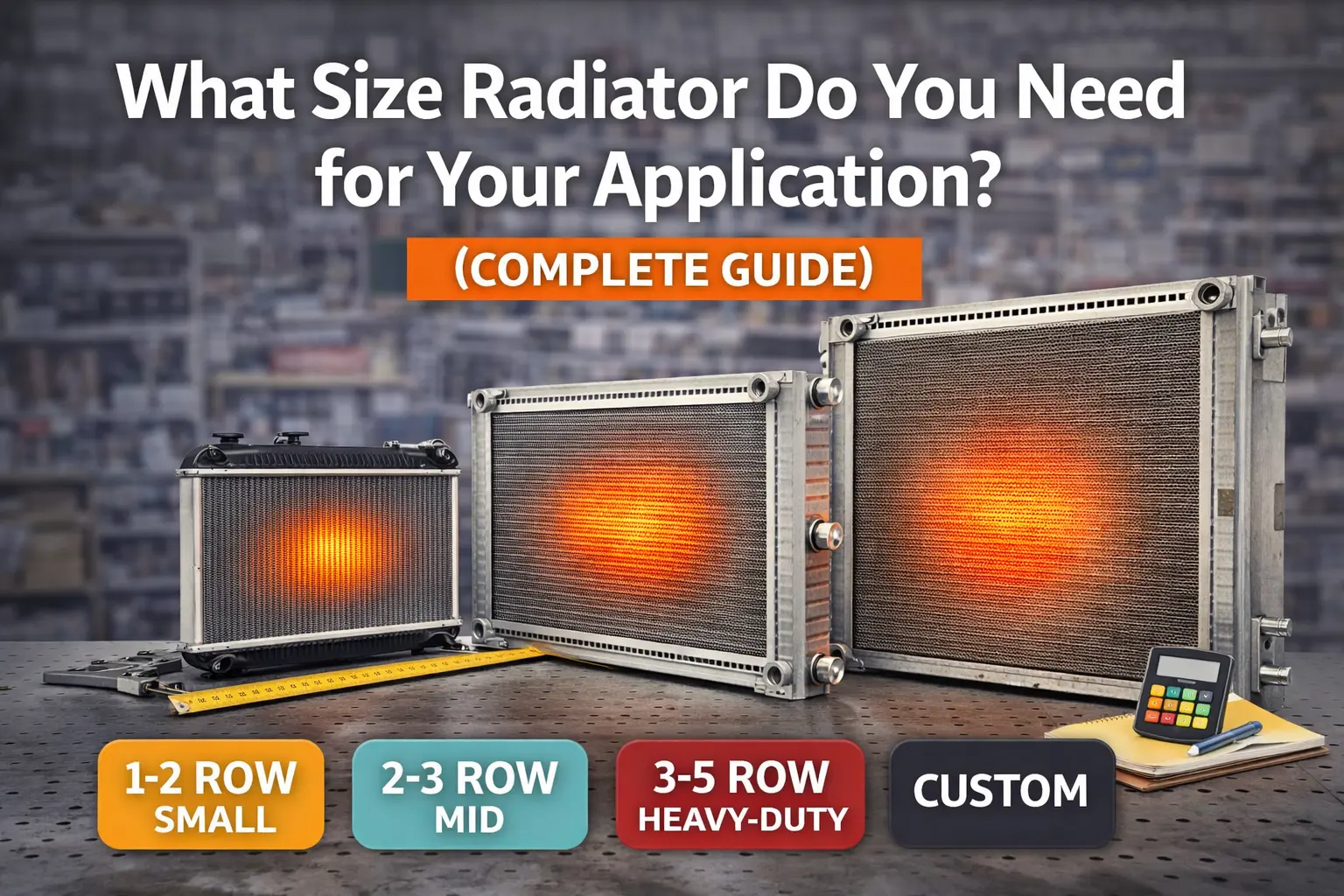
Choosing the right radiator size isn’t just a technical decision—it directly impacts cooling efficiency, performance, and equipment lifespan. Whether you’re working with automotive engines, industrial machines, or hydraulic systems, selecting the correct radiator size ensures optimal heat dissipation and prevents costly failures.
If you’re unsure how to determine the ideal radiator size, this guide will break it down in a simple, practical way.
Why Radiator Size Matters
A radiator that’s too small will struggle to dissipate heat, leading to:
- Overheating
- Reduced performance
- Increased wear and tear
On the other hand, an oversized radiator can:
- Increase costs unnecessarily
- Add extra weight
- Affect system design and space
The goal is to find the perfect balance between size, performance, and efficiency.
Key Factors That Determine Radiator Size
1. Heat Load (Most Important Factor)
The first step is understanding how much heat your system generates.
Formula (Basic Understanding):
Heat Load (kW) = Engine Power × Heat Rejection Factor
Example:
- 100 kW engine → ~30–40% heat goes to radiator
- So the radiator must handle ~30–40 kW heat load
The higher the heat load, the larger the radiator required.
2. Application Type
Different applications require different radiator sizes:
Automotive Vehicles
- Compact radiators for cars
- Larger radiators for trucks and buses
Industrial Equipment
- Heavy-duty radiators for continuous operation
Hydraulic Systems / Combi Coolers
- Require combined cooling for oil + engine
3. Airflow Availability
Radiators rely on airflow to dissipate heat.
Types of Airflow:
- Natural airflow (low efficiency)
- Forced airflow (fans)
Poor airflow = larger radiator needed
Better airflow = a smaller radiator can perform efficiently
4. Ambient Temperature
Environmental conditions play a big role.
- High-temperature regions → larger radiator required
- Cooler climates → a smaller radiator may suffice
In India or the Middle East, always oversize slightly for safety.
5. Core Design and Technology
Not all radiators of the same size perform equally.
Common Designs:
- Tube & Fin
- Bar & Plate (higher efficiency)
Advanced designs can:
- Improve cooling performance
- Reduce the required size
6. Material Used
Aluminium radiators are more efficient than traditional materials.
Benefits of Aluminium:
- Better heat transfer
- Lightweight
- Compact design
This means you can often use a smaller aluminium radiator for the same performance.
7. Space Constraints
Sometimes, your available space defines the radiator size.
Considerations:
- Engine bay size
- Mounting area
- Airflow path
In compact designs (EVs, modern cars), custom radiators are often required.
How to Calculate the Right Radiator Size (Step-by-Step)
Step 1: Determine Heat Load
- Identify the engine or system power
- Calculate heat rejection
Step 2: Check Operating Conditions
- Ambient temperature
- Duty cycle (continuous/intermittent)
Step 3: Evaluate Airflow
- Fan capacity
- Air velocity
Step 4: Select Core Type
- Choose an efficient design (bar & plate recommended)
Step 5: Match with Manufacturer Specifications
- Compare with radiator performance charts
- Choose an appropriate size and configuration
Quick Sizing Rule of Thumb
While exact calculations are best, here’s a general idea:
- Small car → 1–2 row radiator
- SUV/LCV → 2–3 row radiator
- Heavy-duty truck → 3–5 row radiator
- Industrial equipment → Custom heavy-duty radiator
Always consult a manufacturer for precise sizing.
Common Mistakes to Avoid
Choosing based on price only
Ignoring airflow conditions
Underestimating heat load
Not considering the ambient temperature
Using outdated radiator designs
When Do You Need a Custom Radiator?
You should go for a custom solution if:
- Standard sizes don’t fit your system
- You have high-performance requirements
- You’re working with EVs or advanced machinery
Custom radiators ensure:
- Perfect fit
- Maximum efficiency
- Long-term reliability
Benefits of Choosing the Right Radiator Size
Improved cooling performance
Longer equipment lifespan
Better fuel efficiency
Reduced maintenance costs
Enhanced operational reliability
Conclusion
Selecting the right radiator size is not just about dimensions—it’s about understanding your system’s heat load, environment, airflow, and application requirements. With modern advancements in aluminium radiator technology, it’s now possible to achieve high performance even with compact designs.
If you want optimal results, always consult an experienced manufacturer who can guide you with customized cooling solutions tailored to your application.
FAQs
1. How do I know if my radiator is too small?
If your system frequently overheats or struggles under load, your radiator may be undersized.
2. Can I use a bigger radiator than required?
Yes, but it may increase cost and space usage without significant benefits.
3. Are aluminium radiators better for compact systems?
Yes, they offer better efficiency and allow smaller, lightweight designs.
4. What is the ideal radiator size for industrial use?
It depends on heat load, but most industrial systems require custom-designed radiators.
5. Do airflow conditions affect radiator size?
Yes, poor airflow requires a larger radiator, while efficient airflow reduces size requirements.