
Radiator vs Condenser: What’s the Difference and Why It Matters
Posted on January 30, 2026
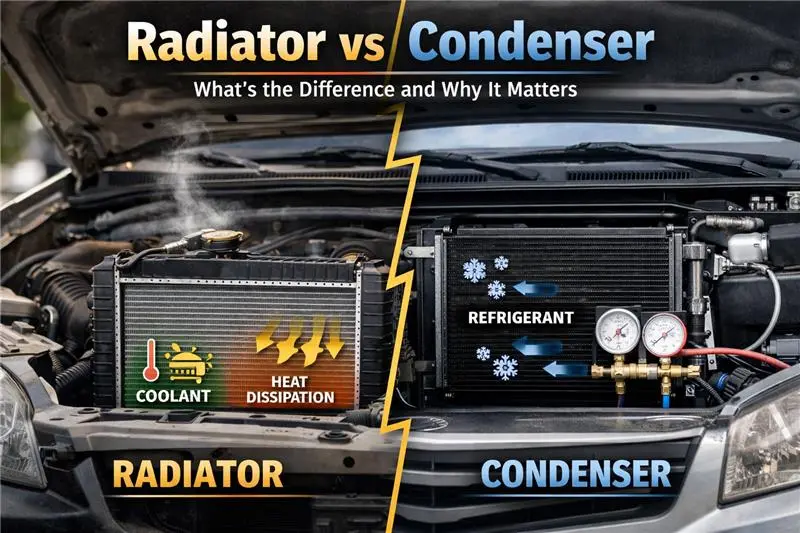
Many people confuse radiators and condensers because both look similar and both manage heat. But in reality, they serve very different purposes.
Understanding this difference is critical when selecting the right cooling solution for vehicles, HVAC systems, or industrial equipment.
In this article, we’ll break down the difference between a radiator and a condenser, their functions, applications, and how choosing the correct heat exchanger manufacturer ensures optimal performance.
Why Heat Management Matters
Whether it’s an engine or an air conditioning system, excess heat causes:
- Reduced efficiency
- Higher fuel consumption
- System failure
- Increased maintenance costs
That’s why cooling components like radiators and condensers are essential.
But they don’t do the same job.
What is a Radiator?
A radiator removes heat from engine coolant.
Purpose:
Prevent engine overheating
Used in:
- Cars & trucks
- Generators
- Construction equipment
- Agricultural machinery
- Industrial engines
Working Fluid:
Coolant or antifreeze
Function:
Transfers heat from liquid → air
What is a Condenser?
A condenser removes heat from refrigerant gas in HVAC or air conditioning systems.
Purpose:
Convert hot gas into liquid
Used in:
- Air conditioners
- Refrigeration systems
- HVAC units
- Cold storage systems
Working Fluid:
Refrigerant
Function:
Transfers heat from gas → air
Key Differences Between Radiator and Condenser
1. Function
Radiator → cools engine
Condenser → cools refrigerant
2. System Type
Radiator → engine cooling
Condenser → air conditioning
3. Fluid Type
Radiator → liquid coolant
Condenser → refrigerant gas
4. Goal
Radiator → temperature control
Condenser → phase change (gas to liquid)
How They Look Similar
Both:
- Have tubes and fins
- Use airflow for heat exchange
- Are mounted at the front for airflow
- Act as heat exchangers
Because of this similarity, many people think they’re the same, but their applications are completely different.
How Radiators and Condensers Work Together
In modern vehicles:
- Radiator → cools engine
- Condenser → cools AC refrigerant
Both operate simultaneously to ensure:
- Comfortable cabin temperature
- Engine reliability
If either fails, performance drops.
Industrial Applications
Radiators:
- Diesel gensets
- Mining trucks
- Heavy construction equipment
- Tractors
Condensers:
- Cold storage plants
- HVAC systems
- Process cooling
- Industrial refrigeration
Industrial businesses often require custom-built heat exchangers from specialized manufacturers.
Choosing the Right Component Matters
Using the wrong design can cause:
Inefficient cooling
Energy loss
Frequent breakdowns
Higher operating costs
That’s why working with an experienced cooling system manufacturer ensures proper selection and performance.
Materials Used in Both Systems
Aluminium
- Lightweight
- High heat transfer
- Corrosion resistant
Copper-Brass
- Excellent conductivity
- Durable
- Ideal for heavy-duty use
Advanced manufacturers use vacuum brazing and precision engineering for longer life.
Maintenance Tips
For Radiators:
- Check coolant level
- Flush periodically
- Clean fins
- Inspect leaks
For Condensers:
- Remove dust
- Maintain airflow
- Clean coils
- Check refrigerant pressure
Proper maintenance increases lifespan significantly.
Why Work with a Professional Cooling Manufacturer
An experienced manufacturer provides:
- Custom designs
- OEM compatibility
- High-performance cores
- Durability testing
- Long-term support
Companies like NBR Cooling Systems specialize in engineered heat exchangers, radiators, and condensers for demanding industrial use.
Final Thoughts
While radiators and condensers may look alike, they serve completely different purposes.
Understanding their differences helps you:
- Select the right component
- Improve efficiency
- Reduce downtime
- Extend equipment life
If your business depends on reliable cooling performance, investing in quality heat exchangers from trusted manufacturers is the smartest decision.