
Oil Coolers vs Intercoolers: What Sets Them Apart and Why It Matters
Posted on June 10, 2026
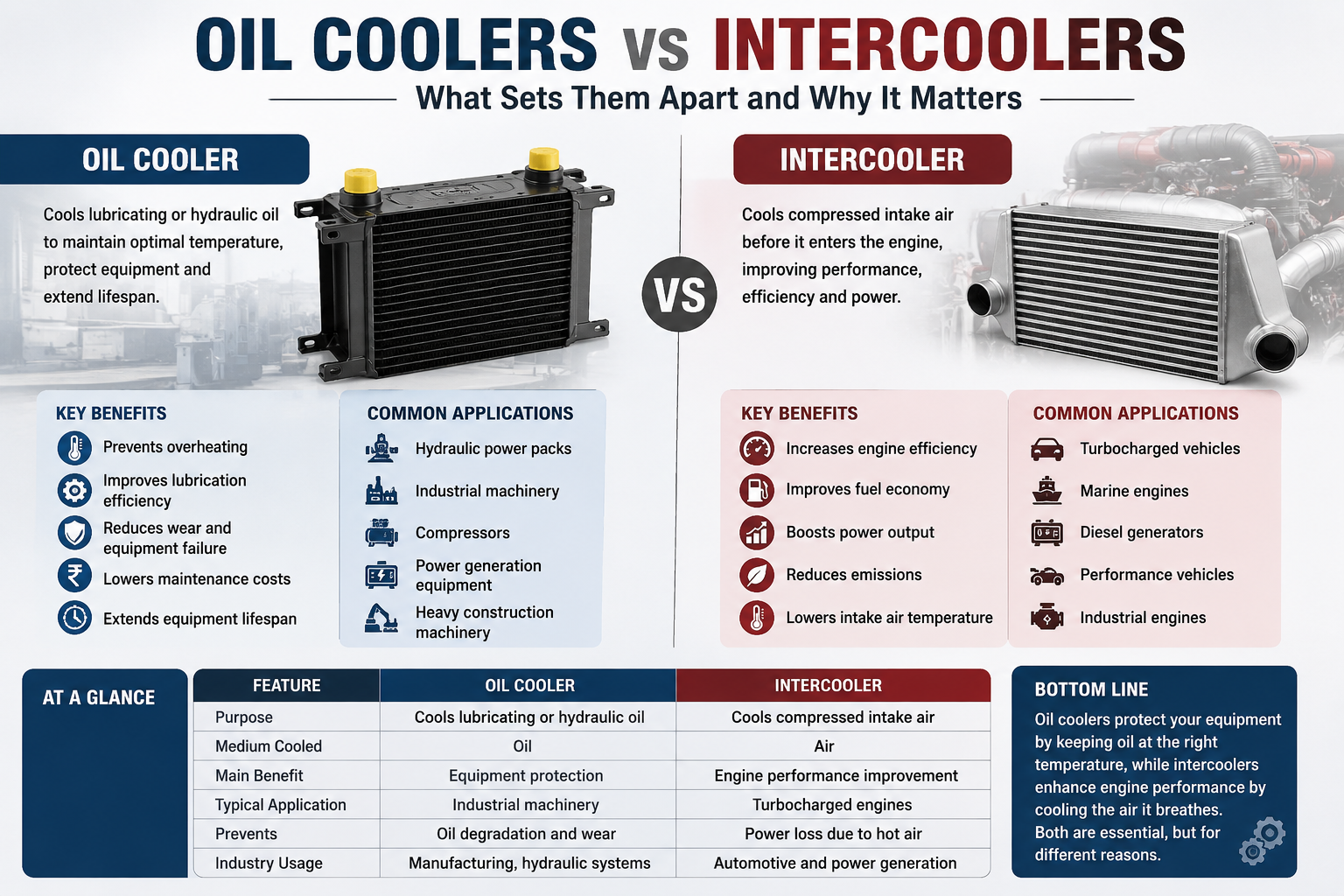
Oil coolers systems are essential for protecting industrial equipment from excessive heat and maintaining optimal performance. Whether you’re sourcing solutions from an experienced Oil cooler manufacturer in India or evaluating different cooling technologies, understanding the distinction between oil coolers and intercoolers is critical. Although both components are designed to manage heat, they operate differently and serve unique roles in industrial and engine applications. Choosing the right solution can significantly improve efficiency, reduce maintenance costs, and extend equipment lifespan.
What is an Oil Cooler?
An oil cooler is a heat exchanger designed to remove excess heat from lubricating or hydraulic oil. By maintaining optimal oil temperatures, it helps:
- Prevent overheating
- Improve lubrication efficiency
- Reduce component wear
- Extend equipment lifespan
- Lower maintenance costs
Oil coolers are commonly used in:
- Hydraulic power packs
- Industrial machinery
- Compressors
- Power generation equipment
- Heavy construction machinery
What is an Intercooler?
An intercooler is designed to cool compressed air before it enters an engine.
When air is compressed by a turbocharger or supercharger, its temperature increases significantly. Hot air contains less oxygen, which reduces combustion efficiency. An intercooler lowers the air temperature, increasing air density and improving engine performance.
Intercoolers are commonly found in:
- Turbocharged vehicles
- Marine engines
- Diesel generators
- Performance vehicles
- Industrial engines
Oil Cooler vs Intercooler: Key Differences
| Feature | Oil Cooler | Intercooler |
| Purpose | Cools lubricating or hydraulic oil | Cools compressed intake air |
| Medium Cooled | Oil | Air |
| Main Benefit | Equipment protection | Engine performance improvement |
| Typical Application | Industrial machinery | Turbocharged engines |
| Prevents | Oil degradation and wear | Power loss due to hot air |
| Industry Usage | Manufacturing, hydraulic systems | Automotive and power generation |
Why Oil Coolers Matter in Industrial Applications
An oil cooler helps maintain stable operating temperatures and ensures consistent lubrication performance.
Benefits of Using an Oil Cooler
✔ Improved thermal management
✔ Reduced equipment downtime
✔ Longer service life
✔ Better system reliability
✔ Lower operating costs
Industries increasingly rely on a trusted Oil cooler manufacturer in India to provide customized cooling solutions that meet specific performance requirements.
Why Intercoolers Matter
Intercoolers are essential in applications where compressed air temperatures become excessively high.
Benefits of Intercoolers
✔ Increased engine efficiency
✔ Improved fuel economy
✔ Higher power output
✔ Lower emissions
✔ Reduced thermal stress
Although intercoolers improve engine performance, they do not replace the need for an oil cooler in systems where oil temperature management is critical.
Modern Cooling Technologies
Recent innovations have significantly improved thermal management across industries.
Advanced aluminium cooling systems offer excellent heat transfer capabilities while reducing weight and improving corrosion resistance. These systems are widely used in modern industrial cooling applications.
Similarly, the Micro channel condenser has become a preferred choice for compact and energy-efficient cooling solutions due to its superior heat exchange performance and reduced refrigerant requirements.
These technologies are helping manufacturers develop more efficient and reliable cooling systems for demanding industrial environments.
Choosing the Right Cooling Solution
Choose an Oil Cooler if you need:
- Hydraulic oil cooling
- Lubrication oil temperature control
- Industrial machinery protection
- Reduced maintenance expenses
- Longer equipment lifespan
Choose an Intercooler if you need:
- Turbocharger support
- Improved combustion efficiency
- Increased engine power
- Better fuel economy
- Lower intake air temperatures
Working with an experienced Oil cooler manufacturer in India can help determine the correct cooling solution based on operating conditions, pressure requirements, and thermal loads.
Many industries today partner with a reputable Oil cooler manufacturer in India to improve operational efficiency and reduce long-term maintenance costs.
Conclusion
Although both oil coolers and intercoolers are designed to manage heat, they serve completely different purposes. An oil coolers protects machinery by regulating oil temperature and ensuring proper lubrication, while an intercooler improves engine performance by cooling compressed air before combustion.
Understanding these differences allows businesses to choose the right thermal management solution, improve reliability, reduce downtime, and maximize equipment performance.
FAQ’s
What is an oil cooler and how does it work?
An oil cooler is a heat exchanger that removes excess heat from lubricating or hydraulic oil to maintain optimal operating temperatures and improve equipment performance.
What is the difference between an oil cooler and an intercooler?
An oil cooler regulates oil temperature to protect machinery, while an intercooler cools compressed air to improve engine efficiency and performance.
How do I choose the right oil cooler size for my application?
Oil cooler sizing depends on heat load, oil flow rate, operating temperature, ambient conditions, and equipment specifications.
Can an oil cooler improve equipment lifespan?
Yes, maintaining proper oil temperatures reduces wear, improves lubrication efficiency, and extends the life of critical components.
What are the signs of a failing oil cooler?
Common signs include rising oil temperatures, reduced cooling performance, oil contamination, leaks, and increased equipment downtime.
How long does an industrial oil cooler typically last?
A properly maintained oil cooler can last many years, depending on operating conditions, maintenance practices, and system design.