
Oil Cooler vs Radiator: What’s the Difference?
Posted on July 10, 2026
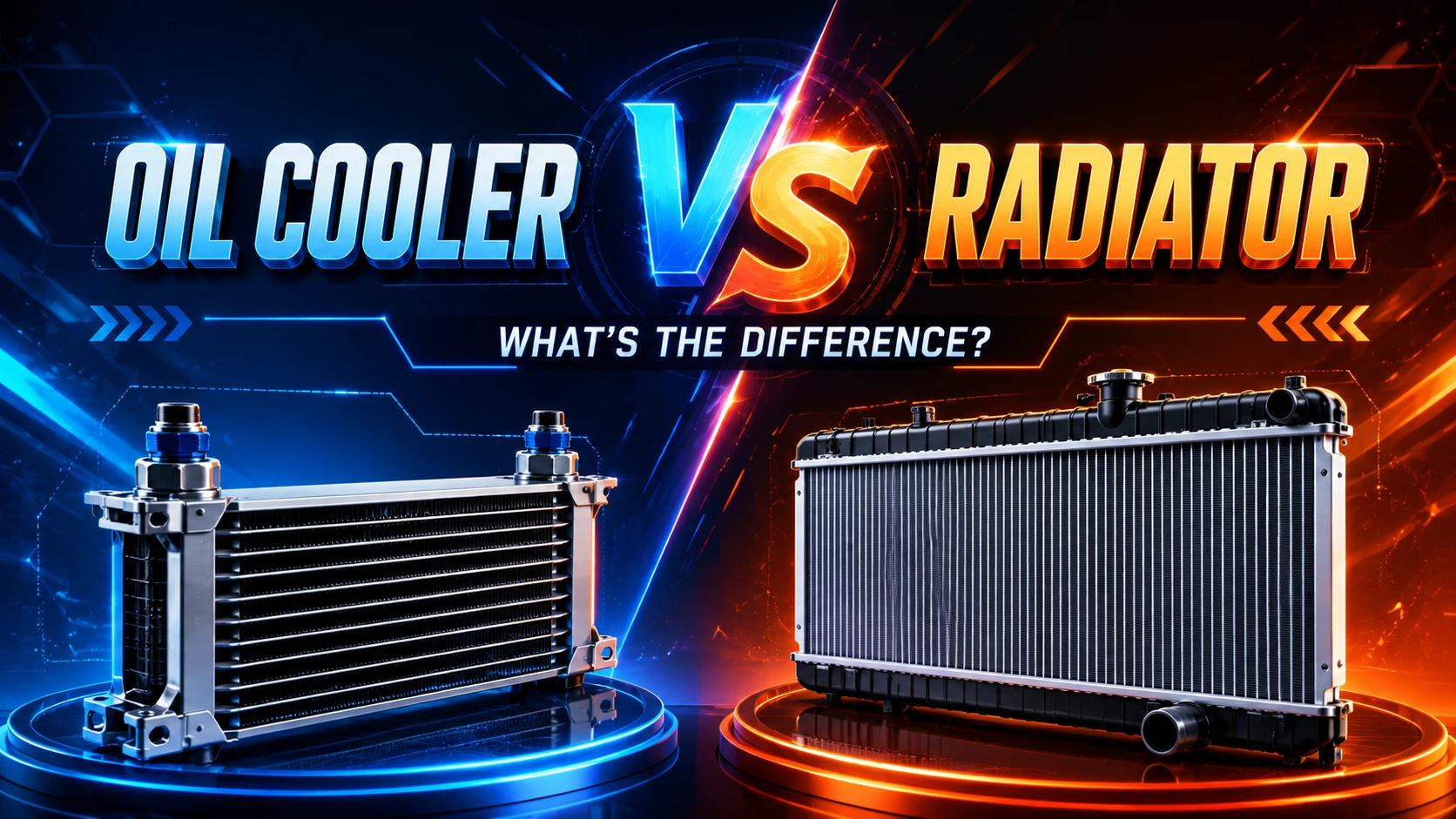
An Oil cooler plays a vital role in maintaining the performance and reliability of engines and industrial equipment by controlling oil temperature during operation. Although it is often compared with a radiator, the two components perform different tasks and work together to keep machines running efficiently. Understanding the difference can help you choose the right cooling solution, reduce maintenance costs, and improve the lifespan of your equipment.
Whether you operate heavy machinery, hydraulic systems, commercial vehicles, generators, or industrial equipment, selecting the appropriate cooling component is essential for consistent performance.
What Is an Oil Cooler?
An Oil cooler is a heat exchanger designed to remove excess heat from lubricating oil before it returns to the engine or hydraulic system. By maintaining the correct oil temperature, it preserves the oil’s viscosity, reduces friction between moving parts, and protects critical components from premature wear.
In applications that operate continuously or under heavy loads, proper oil temperature control is essential for preventing overheating and ensuring long-term reliability.
What Is a Radiator?
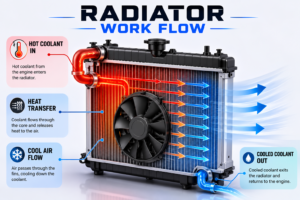
A radiator is another important cooling component, but its function is different. Instead of cooling oil, it removes heat from the engine coolant. The coolant absorbs heat from the engine and flows through the radiator, where air passing through cooling fins lowers its temperature before circulating back into the engine.
Although both systems manage heat, they cool different fluids and perform separate roles.
Oil Cooler vs Radiator: Understanding the Difference
The biggest difference between an Oil cooler and a radiator lies in the type of fluid each component cools.
An oil cooling system is responsible for lowering the temperature of lubricating oil, helping maintain proper lubrication even during demanding operating conditions. A radiator, however, keeps engine coolant at a safe temperature to prevent the engine from overheating.
Instead of replacing one another, both components complement each other to create an efficient thermal management system.
Quick Comparison
| Feature | Oil Cooler | Radiator |
| Purpose | Cools engine oil | Cools engine coolant |
| Fluid | Lubricating oil | Engine coolant |
| Main Function | Reduces oil heat | Prevents overheating |
| Heat Transfer | Oil to air | Coolant to air |
| Best For | Heavy-duty equipment | Everyday engines |
| Key Benefit | Better lubrication | Stable temperature |
| Maintenance | Inspect oil leaks | Check coolant level |
| Common Issue | Oil leakage | Coolant leakage |
| Typical Use | Industrial machinery | Passenger vehicles |
How Does an Oil Cooler Work?
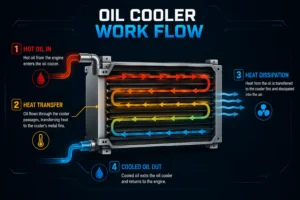
An Oil cooler works by allowing hot lubricating oil to pass through a series of internal passages where heat is transferred to air or coolant. As the oil cools, it returns to the engine or hydraulic system with improved viscosity and lubrication properties.
This process helps reduce friction, improves efficiency, and protects expensive engine components from excessive heat.
Benefits of Using an Oil Cooler
Installing an Oil cooler offers several advantages, especially in demanding industrial and automotive applications.
Some of the major benefits include:
- Maintains optimal oil temperature
- Improves engine efficiency
- Extends engine life
- Reduces component wear
- Supports continuous heavy-duty operation
- Enhances equipment reliability
- Lowers maintenance costs
- Improves overall system performance
These advantages become even more important in industries where equipment operates for extended periods under heavy workloads.
Where Are Oil Coolers Commonly Used?
Oil cooling technology is widely used across various industries where effective heat management is essential.
Common applications include:
- Hydraulic power units
- Construction machinery
- Mining equipment
- Agricultural machinery
- Air compressors
- Diesel generators
- Marine engines
- Commercial vehicles
- Manufacturing equipment
Many modern industries also rely on aluminium cooling systems because they offer excellent heat transfer, lightweight construction, and improved corrosion resistance.
How to Choose the Right Oil Cooler
Selecting the right Oil cooler depends on several important factors.
Consider:
- Operating temperature
- Oil flow rate
- Pressure requirements
- Available installation space
- Cooling capacity
- Environmental conditions
- Maintenance requirements
Choosing the correct cooling solution helps improve efficiency while reducing the risk of equipment failure.
Maintenance Tips
Proper maintenance ensures that an Oil cooler continues to perform efficiently throughout its service life.
Regular inspections should include checking for oil leaks, cleaning external fins, monitoring operating temperatures, inspecting hoses and fittings, and replacing worn components when necessary.
Preventive maintenance not only improves performance but also minimizes unexpected downtime and costly repairs.
Modern Cooling Technology
Cooling technology has advanced significantly in recent years, allowing manufacturers to produce compact and highly efficient heat exchangers for industrial and automotive applications.
One example is the MFC condenser, which demonstrates how modern heat exchanger designs continue to improve thermal efficiency while reducing overall system size and weight.
These innovations help industries achieve greater energy efficiency and equipment reliability.
Final Thoughts
Choosing between an Oil cooler and a radiator isn’t about deciding which one is better—it is about understanding the role each plays within a complete cooling system. While a radiator protects the engine by cooling the coolant, an oil cooling solution safeguards lubrication by controlling oil temperature.
For applications operating under heavy loads, high temperatures, or continuous duty cycles, investing in the right cooling technology can significantly improve equipment performance, extend component life, and reduce long-term operating costs.
As thermal management continues to evolve, advanced solutions such as the Multi flow condenser are helping industries achieve higher efficiency, greater durability, and more reliable cooling performance for modern machinery.
FAQ’s
What is an oil cooler and how does it work?
An oil cooler is a heat exchanger that removes excess heat from engine or hydraulic oil to maintain the optimal operating temperature. It works by circulating hot oil through cooling tubes or fins, where heat is transferred to air or coolant before the cooled oil returns to the system, improving lubrication, efficiency, and equipment lifespan.
Can an oil cooler reduce engine temperature?
Yes. An oil cooler helps reduce engine temperature by cooling the engine oil, which absorbs excess heat during operation. This improves lubrication, minimizes heat buildup, and supports more efficient engine cooling, especially under heavy loads or high-performance conditions.
Can a leaking oil cooler damage an engine?
Yes. A leaking oil cooler can lead to low oil levels or contaminated oil, reducing lubrication and causing excessive engine wear, overheating, or even severe engine damage if not repaired promptly.
Can an oil cooler be repaired or should it be replaced?
Minor issues like loose fittings or external leaks may be repairable, but a cracked, corroded, or internally damaged oil cooler should typically be replaced to ensure reliable performance and prevent further engine damage.
What causes an oil cooler to fail?
An oil cooler can fail due to corrosion, internal blockages, excessive pressure, vibration, poor maintenance, or normal wear over time. These issues can reduce cooling efficiency and lead to oil leaks or overheating.
When should you replace an oil cooler?
You should replace an oil cooler if it develops persistent leaks, internal blockages, corrosion, or physical damage, or if it no longer cools the oil effectively despite proper maintenance.