
Microchannel Condenser vs Traditional Condenser: Which Cools Faster?
Posted on June 8, 2026
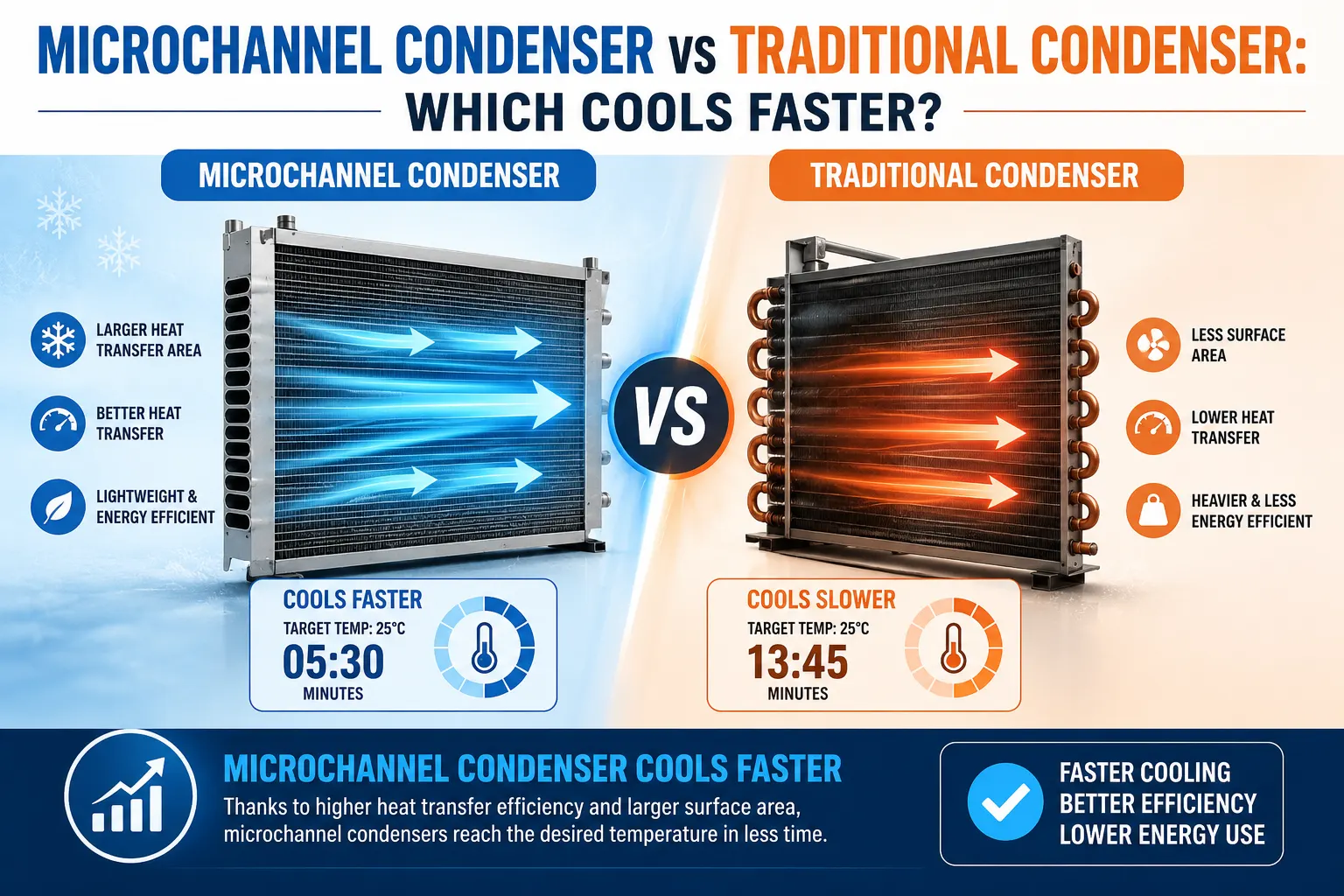
Microchannel condenser technology has been gaining serious attention in the HVAC and refrigeration space. With growing pressure on manufacturers to cut energy use, reduce refrigerant volumes, and push cooling performance further, the conversation around microchannel versus traditional condenser designs has become more relevant than ever. So which one actually cools faster? That depends on several things — heat transfer efficiency, airflow design, refrigerant flow, and the conditions the system operates under. Below, we break down the key differences so you can make sense of which technology comes out on top.
What Does a Condenser Actually Do?
A condenser pulls heat out of the refrigerant and pushes it into the surrounding air. The quicker it does that, the faster your cooling system performs. Everything else follows from that one function.
What Is a Microchannel Condenser?
A micro channel condenser uses flat aluminum tubes built with several small internal channels running through them. This construction increases the surface area available for heat exchange while keeping the overall unit compact and light.
Key characteristics:
- Greater surface area for heat transfer
- Lower refrigerant volume required
- Compact, lightweight build
- Strong cooling efficiency
- Standard in modern HVAC and automotive systems
What Is a Traditional Condenser?
Traditional condensers are built around copper tubes paired with aluminum fins. They have a long history in residential and commercial cooling applications and remain widely used today.
Common characteristics:
- Proven, dependable design
- Straightforward to repair and service
- Broadly used across residential and commercial setups
- Generally bulkier and heavier than microchannel units
- Requires a larger refrigerant charge to operate
Which Condenser Cools Faster?
In most real-world scenarios, microchannel condensers hold the edge. Here’s why:
- Heat moves from the refrigerant to the air more rapidly
- Airflow through the coil is less restricted
- Refrigerant is distributed more evenly across the coil
- Less energy is lost during operation
These factors combined mean a MCHX condenser can deliver quicker cooling results while drawing less power in the process.
Heat Transfer: A Direct Comparison
Heat transfer capacity is the single biggest factor in how fast a condenser cools.
Microchannel Condenser:
- High surface-area-to-volume ratio
- Efficient refrigerant movement through multiple channels
- Rejects heat more rapidly
- Consistent, efficient operation under load
Traditional Condenser:
- Larger tube diameter limits heat transfer efficiency
- Needs a bigger coil to reach comparable performance levels
- Generally slower at moving heat out of the refrigerant
This gap is a key reason many manufacturers have shifted toward Multi Flow Condenser technology in newer cooling equipment.
Energy Efficiency
Cooling faster typically translates to using less energy — and microchannel designs reflect that well.
Microchannel advantages:
- Reduced power draw
- Less strain on the compressor
- Smaller refrigerant charge needed
- Lower running costs over time
For both homeowners and businesses, these savings add up in a meaningful way across a system’s lifespan.
Durability and Maintenance
Each design brings something different to the table when it comes to long-term reliability and upkeep.
Traditional Condensers:
- Easier to repair on-site
- Well understood by most service technicians
- Decades of proven performance in the field
Microchannel Condensers:
- Lighter construction reduces physical stress on the unit
- All-aluminum build offers solid corrosion resistance
- Less prone to vibration-related wear
- Structurally robust despite the compact size
An aluminum AC condenser is particularly well suited to environments where weight savings and resistance to corrosion are priorities.
Where Are Microchannel Condensers Used?
Microchannel technology has found its way into a wide range of applications:
- Commercial HVAC systems
- Residential air conditioners
- Automotive air conditioning
- Bus and transport cooling
- Industrial refrigeration
- Rooftop cooling units
The combination of compact size and high performance makes them a practical fit across multiple industries.
Quick Comparison
| Feature | Microchannel Condenser | Traditional Condenser |
| Cooling Speed | Faster | Moderate |
| Heat Transfer | Excellent | Good |
| Refrigerant Requirement | Lower | Higher |
| Weight | Lightweight | Heavier |
| Energy Efficiency | Higher | Moderate |
| Space Requirement | Compact | Larger |
| Repairability | Moderate | Easier |
Final Thoughts
On the question of cooling speed, micro channel condensers consistently perform better than traditional designs. Better heat transfer, a smaller refrigerant requirement, and a more compact build make them the stronger choice for modern cooling systems. Traditional condensers still hold value — they’re reliable, serviceable, and well understood — but the industry shift toward solutions like the aluminum AC condenser reflects a practical move toward better efficiency, lower costs, and faster cooling overall.
FAQs
Why do manufacturers prefer MCHX condensers?
A MCHX condenser helps manufacturers trim system weight, hit efficiency targets, and comply with tightening energy standards. The compact form factor also gives engineers more flexibility in how they lay out equipment.
What sets a Multi Flow Condenser apart from a traditional condenser?
A Multi Flow Condenser runs refrigerant through multiple channels simultaneously, improving both heat transfer and distribution. Traditional condensers use larger copper tubes and typically need more space and refrigerant to match that level of performance.
Do microchannel condensers actually cool faster?
Yes, in most cases. The larger heat transfer surface area and more efficient refrigerant flow allow heat to be shed more quickly, which speeds up the overall cooling process.
Are microchannel condensers energy efficient?
Yes. Because heat is transferred more effectively, the compressor doesn’t have to work as hard — which brings down energy consumption and reduces operating costs.