
Latest Innovations in Aluminium Radiator Manufacturing (2026 Trends)
Posted on March 31, 2026
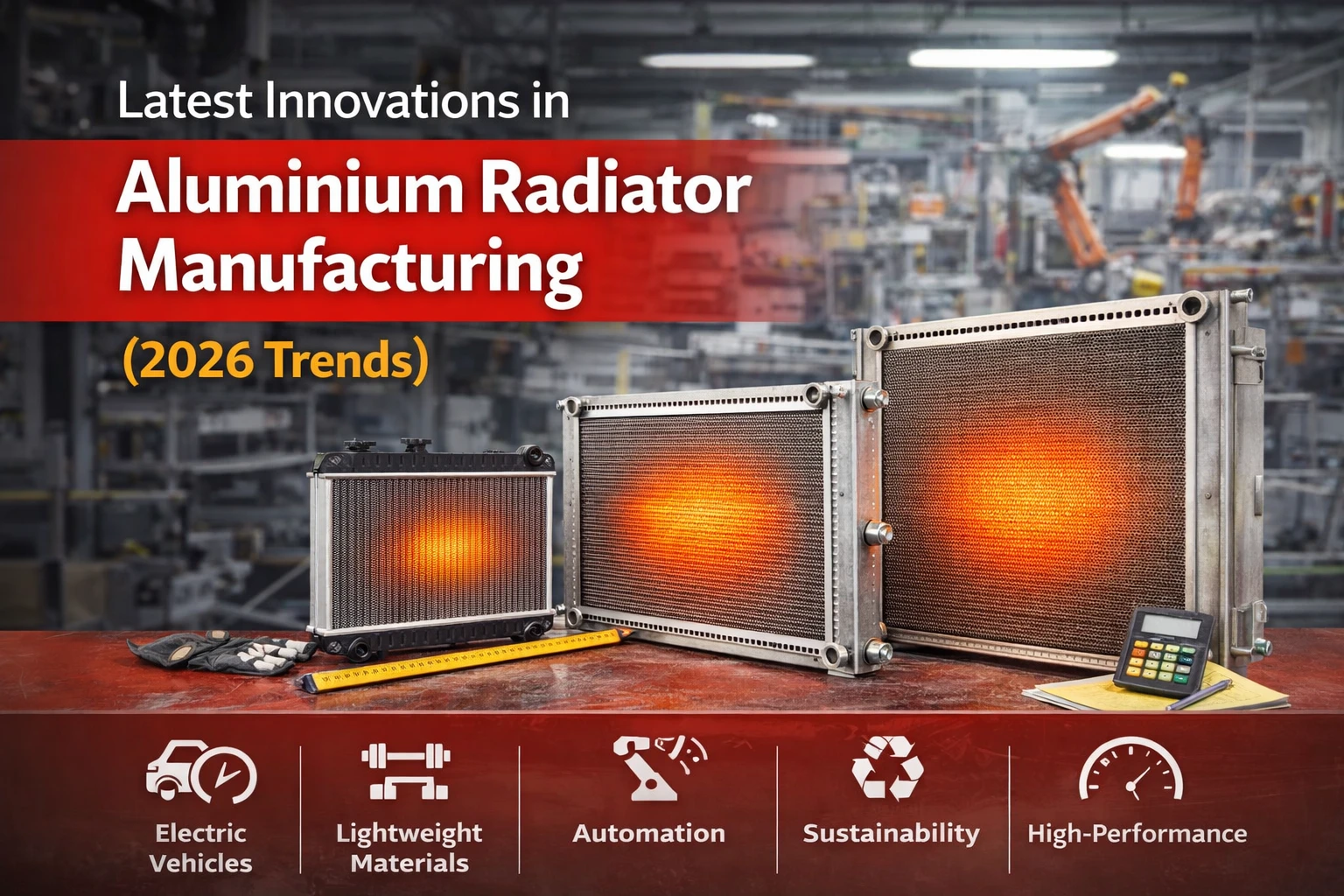
The aluminium radiator industry is evolving rapidly in 2026, driven by electric vehicles (EVs), lightweight engineering, and advanced manufacturing technologies. With increasing demand for efficient thermal management across automotive, industrial, and heavy equipment sectors, manufacturers are adopting cutting-edge innovations to stay competitive.
In this blog, we’ll explore the latest trends and innovations shaping aluminium radiator manufacturing in 2026.
The Growing Importance of Aluminium Radiators in 2026
Aluminium radiators are now the industry standard due to their:
- Lightweight structure
- High heat dissipation efficiency
- Cost-effectiveness
- Compatibility with EV cooling systems
In fact, aluminium radiators dominate modern vehicles, with a significant share of automotive cooling systems using aluminium cores due to efficiency and emission requirements
1. Advanced Vacuum Brazing Technology
One of the biggest innovations is the widespread adoption of vacuum brazing.
What’s New in 2026:
- Improved joint strength
- Leak-proof construction
- Faster production cycles
Vacuum brazing enhances radiator durability and allows manufacturers to produce compact yet high-performance heat exchangers.
2. High-Pressure Die Casting & Precision Manufacturing
Modern aluminium radiator manufacturing is shifting toward high-precision processes such as:
- High-pressure die casting
- CNC machining
- Automated welding (MIG/TIG)
These technologies improve:
- Structural strength
- Dimensional accuracy
- Production scalability
Result: Better quality radiators at lower costs .
3. Thinner & More Efficient Core Designs
Innovation in core geometry and fin design is transforming performance.
Key Developments:
- Thinner aluminium walls
- Advanced fin structures
- Optimized airflow channels
These advancements allow:
- Higher heat transfer rates
- Compact radiator sizes
- Improved fuel efficiency
Modern radiators now deliver more cooling in less space, a major requirement for EVs and compact engines .
4. Integration with Electric Vehicle (EV) Cooling Systems
The rise of EVs is one of the biggest drivers of innovation.
New Applications Include:
- Battery thermal management
- Power electronics cooling
- Integrated cooling modules
Unlike traditional systems, EV cooling requires:
- Precision temperature control
- Multi-component cooling systems
Manufacturers are developing custom aluminium heat exchangers tailored for EV platforms.
5. Lightweighting & Material Innovation
Weight reduction remains a top priority in 2026.
Innovations in Materials:
- Advanced aluminium alloys
- Aluminium-plastic composites
- Hybrid material radiators
These materials offer:
- Reduced weight
- Enhanced durability
- Better thermal efficiency
Material innovation is helping manufacturers meet strict emission and fuel efficiency norms.
6. Smart Manufacturing & Automation (Industry 4.0)
The shift toward smart factories is revolutionizing radiator production.
Key Technologies:
- Robotics and automation
- AI-driven quality control
- IoT-enabled production lines
Benefits include:
- Reduced human error
- Consistent product quality
- Faster production cycles
Automation also improves profitability by optimizing production efficiency.
7. Customization & Modular Design Approach
Modern customers demand application-specific cooling solutions.
What’s Trending:
- Modular radiator designs
- Custom-built cooling systems
- Rapid prototyping
Manufacturers now offer:
- Tailored radiators for OEMs
- Industry-specific solutions (mining, agriculture, EVs)
This flexibility is becoming a major competitive advantage.
8. Sustainability & Green Manufacturing
Sustainability is no longer optional—it’s a necessity.
Eco-Friendly Innovations:
- Use of recycled aluminium
- Energy-efficient production processes
- Reduced carbon emissions
Aluminium is 100% recyclable, making it a preferred material for sustainable manufacturing.
9. Hybrid Cooling Systems & Combi Coolers
Another major trend is the rise of multi-functional cooling systems.
Examples:
- Radiator + oil cooler
- Radiator + intercooler
- Combi cooling units
These systems:
- Save space
- Improve efficiency
- Reduce system complexity
Especially useful in heavy-duty and industrial applications.
10. Enhanced Testing & Quality Control Technologies
Quality standards have significantly improved in 2026.
Advanced Testing Methods:
- Thermal performance testing
- Pressure and leak testing
- Simulation-based design validation
Manufacturers are now using digital twins and simulation software to test radiator performance before production.
11. Growth of Aftermarket & Global Supply Chains
The aftermarket segment is growing rapidly.
Key Trends:
- High demand for replacement radiators
- Global sourcing and exports
- Faster delivery systems
The global aluminium radiator market is expected to grow steadily, driven by automotive and industrial demand.
12. Focus on High-Performance & Heavy-Duty Applications
Industries like construction, mining, and agriculture require robust cooling systems.
Innovations Include:
- Heavy-duty aluminium cores
- Corrosion-resistant coatings
- High-capacity cooling systems
These radiators are designed for:
- Extreme temperatures
- Continuous operation
- Harsh environments
Challenges Driving Innovation
Innovation is also driven by industry challenges:
- Rising raw material costs
- Increasing competition
- Strict emission regulations
Manufacturers are investing heavily in R&D to overcome these challenges and stay competitive.
Future Outlook: What’s Next?
The future of aluminium radiator manufacturing looks promising.
Expected Developments:
- AI-based thermal management systems
- Advanced nanomaterials
- Fully integrated EV cooling modules
- Smart radiators with sensors
With continuous innovation, aluminium radiators will remain a core component in modern cooling systems.
Conclusion
The aluminium radiator manufacturing industry in 2026 is defined by innovation, efficiency, and sustainability. From advanced brazing techniques to EV-specific cooling solutions, manufacturers are pushing boundaries to meet evolving industry demands.
As global demand for high-performance and energy-efficient systems grows, companies that embrace these innovations will lead the market.
FAQs
1. What is the latest technology used in aluminium radiator manufacturing?
Vacuum brazing, automation, and advanced core design are among the latest technologies.
2. Why are aluminium radiators preferred in 2026?
They are lightweight, efficient, cost-effective, and ideal for EV applications.
3. How are EVs influencing radiator manufacturing?
EVs require advanced thermal management systems, driving innovation in radiator design.
4. What role does automation play in manufacturing?
Automation improves quality, reduces costs, and increases production efficiency.
5. Are aluminium radiators environmentally friendly?
Yes, aluminium is recyclable and supports sustainable manufacturing practices.