
Is a Micro channel Condenser Better Than a Copper Condenser for Inverter Air Conditioners?
Posted on May 26, 2026
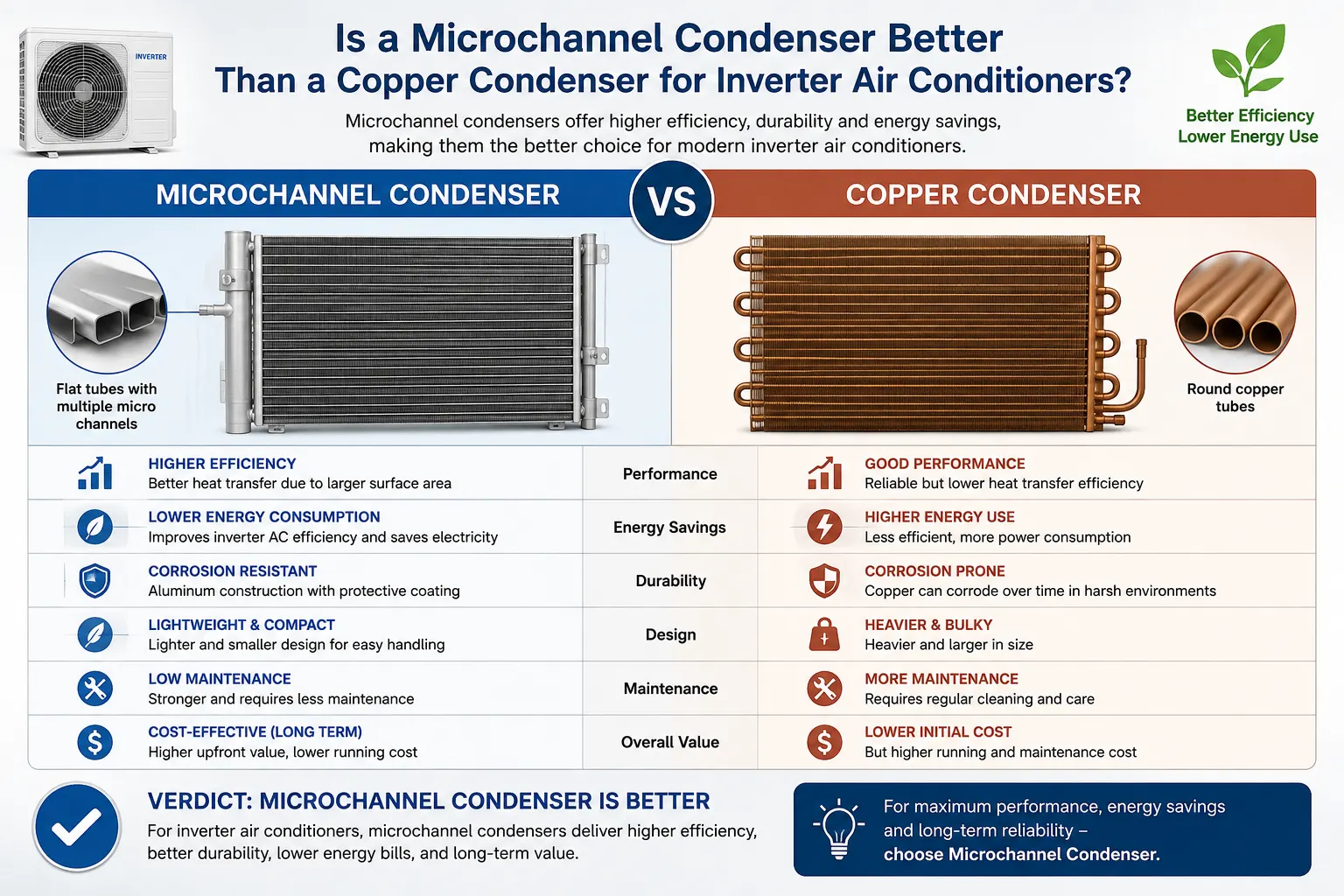
Microchannel condenser technology is becoming one of the most discussed innovations in modern inverter air conditioners due to its lightweight design, faster heat transfer, and energy-efficient cooling performance. Today’s AC buyers are no longer focusing only on tonnage or energy ratings — they are also paying close attention to the type of condenser used inside the system. Across HVAC forums, Reddit discussions, and air conditioner buying guides, many consumers now compare micro channel condensers with traditional copper condensers to understand which option offers better durability, cooling efficiency, and long-term value for inverter AC systems.
The answer depends on what you expect from your AC.
Some users prioritize:
- long-term durability,
- easier repairs,
- and heavy-duty performance.
Others focus more on:
- energy efficiency,
- compact design,
- and lower electricity consumption.
Both condenser technologies have their own strengths, but modern inverter AC systems are increasingly moving toward microchannel designs because of their lightweight structure and improved airflow efficiency.
Let’s understand the real differences in a practical and easy way.
Understanding How Condensers Work in Inverter ACs
The condenser is one of the most important parts of an air conditioner. Its main job is to release the heat collected from inside the room to the outside environment.
In inverter ACs, the condenser becomes even more important because these systems constantly adjust compressor speed to maintain stable cooling and save electricity.
A well-designed condenser helps:
- improve heat transfer,
- maintain cooling consistency,
- reduce compressor strain,
- and improve overall energy efficiency.
That’s why manufacturers continue investing heavily in advanced condenser technologies.
What Is a Microchannel Condenser?
A microchannel condenser is a modern cooling system that uses very small refrigerant channels inside flat aluminium tubes instead of traditional round copper tubing.
These condensers are designed to:
- improve airflow,
- increase heat transfer surface area,
- reduce refrigerant usage,
- and support compact AC designs.
Because of their structure, microchannel systems are now widely used in:
- inverter air conditioners,
- automotive cooling systems,
- refrigeration units,
- and commercial HVAC applications.
Microchannel Condenser vs Copper Condenser
| Feature | Microchannel Condenser | Copper Condenser |
| Material | Mostly aluminium | Copper tubing |
| Weight | Lightweight | Heavy |
| Cooling Efficiency | Very efficient airflow design | Strong thermal conductivity |
| Refrigerant Usage | Lower | Higher |
| Repairability | Difficult to repair | Easier to repair |
| Energy Efficiency | Excellent for inverter ACs | Very good |
| Design | Compact and modern | Larger structure |
| Cost | More affordable manufacturing | More expensive |
Why Modern Inverter ACs Prefer Microchannel Technology
One of the biggest reasons manufacturers are shifting toward microchannel technology is energy efficiency.
Modern inverter ACs are designed to:
- maintain stable temperatures,
- consume less electricity,
- and operate smoothly for long hours.
Microchannel condensers help achieve this because their compact structure improves airflow and heat dissipation efficiency.
The smaller refrigerant channels allow:
- faster heat release,
- smoother refrigerant movement,
- and reduced compressor workload.
This directly supports better electricity savings during daily operation.
Better Airflow and Compact Design
Traditional copper condensers usually require larger tube-and-fin structures. In comparison, microchannel systems are much more compact.
This helps manufacturers create:
- slimmer outdoor units,
- lightweight AC systems,
- and modern airflow-focused designs.
For apartments and compact urban spaces, this becomes a major practical advantage.
Lower Refrigerant Requirement
Another major advantage of microchannel systems is reduced refrigerant usage.
Because of optimized channel distribution, these systems often require less refrigerant compared to conventional copper condensers.
This helps:
- improve system efficiency,
- reduce operating costs,
- and support eco-friendly cooling solutions.
Are Copper Condensers Still Better in Some Areas?
Yes, absolutely.
Copper condensers still offer some practical advantages, especially in terms of:
- repairability,
- long-term durability,
- and corrosion resistance.
If leakage occurs, copper coils are usually easier to repair compared to aluminium microchannel systems.
That’s why some premium AC brands still promote copper condensers heavily, especially for regions with:
- coastal humidity,
- harsh environmental exposure,
- or heavy-duty usage conditions.
Technology Comparison Breakdown
| Technology | Main Benefit | Common Usage |
| Microchannel Condenser | Better airflow & energy efficiency | Modern inverter ACs |
| Copper Tube Condenser | Easier repair & durability | Premium cooling systems |
| Parallel Flow Design | Faster heat dissipation | Automotive & HVAC systems |
Where Multi Flow Designs Come Into the Picture
Many modern HVAC systems now combine microchannel technology with advanced refrigerant flow management systems like the Multi flow condenser design.
These systems improve:
- refrigerant distribution,
- airflow consistency,
- and thermal performance.
Instead of relying on a single refrigerant path, multiple flow channels help distribute cooling more evenly across the condenser surface.
This helps improve:
- cooling stability,
- energy efficiency,
- and compressor performance.
Why Multi Channel Cooling Systems Are Growing Rapidly
The HVAC industry is continuously focusing on:
- lower energy consumption,
- compact AC structures,
- and improved cooling efficiency.
That’s one reason advanced Multi channel condenser technologies are becoming increasingly common in:
- inverter air conditioners,
- commercial HVAC systems,
- and automotive cooling applications.
These systems are designed to maximize heat transfer while reducing overall system load, which becomes very important in high-temperature environments.
Which Condenser Is Better for Inverter Air Conditioners?
The answer depends on your priorities.
A microchannel condenser may be better if you want:
- lightweight outdoor units,
- better airflow efficiency,
- lower refrigerant usage,
- compact inverter AC designs,
- and improved electricity savings.
A copper condenser may be better if you prioritize:
- easier repair,
- long-term heavy-duty durability,
- and better corrosion resistance in coastal regions.
For most modern residential inverter ACs, microchannel systems now provide an excellent balance between performance, efficiency, and affordability.
Important Things Buyers Should Know
Before choosing any air conditioner, it’s important to understand that condenser performance also depends on:
- maintenance habits,
- installation quality,
- airflow conditions,
- and local climate.
Even the best condenser technology can underperform if:
- airflow is blocked,
- servicing is ignored,
- or the outdoor unit is poorly maintained.
Regular cleaning and annual servicing still play a major role in long-term AC efficiency.
Final Thoughts
MCHX Condenser Manufacturer India solutions are becoming increasingly important as modern HVAC and air conditioning systems continue shifting toward compact, energy-efficient, and high-performance cooling technologies. At NBR Cooling Systems, we focus on manufacturing advanced MCHX condenser solutions engineered to meet the evolving demands of modern air conditioning, refrigeration, automotive, and industrial cooling applications.
The discussion today is no longer only about choosing between traditional condenser materials, but about adopting advanced cooling technologies that improve thermal efficiency, airflow optimization, refrigerant management, and overall HVAC system performance. Modern air conditioner manufacturers are increasingly prioritizing lightweight system architecture, efficient heat transfer, and energy-conscious cooling solutions to meet current industry standards and environmental requirements.
As a trusted MCHX Condenser Manufacturer India, NBR Cooling Systems manufactures high-performance microchannel heat exchanger condensers designed for inverter air conditioners, commercial HVAC systems, transport cooling systems, and industrial refrigeration applications. Compared to conventional condenser systems, MCHX condensers provide compact construction, faster heat dissipation, lower refrigerant usage, reduced system weight, and enhanced cooling efficiency.
With growing demand for modern energy-efficient HVAC systems, NBR Cooling Systems continues to deliver precision-engineered MCHX condenser solutions that help manufacturers improve cooling reliability, operational efficiency, and long-term system performance across domestic and global markets.
FAQs
Is a microchannel condenser better for inverter ACs?
Yes, microchannel condensers are widely used in inverter ACs because they improve airflow efficiency and reduce compressor workload.
Are microchannel condensers energy efficient?
Yes. Their compact refrigerant channels improve heat transfer and help reduce electricity consumption.
Can microchannel condensers be repaired?
Small issues can sometimes be repaired, but in many cases replacement is considered more practical than repair.