
Industrial Condensers in HVAC Systems: Key Benefits
Posted on February 23, 2026
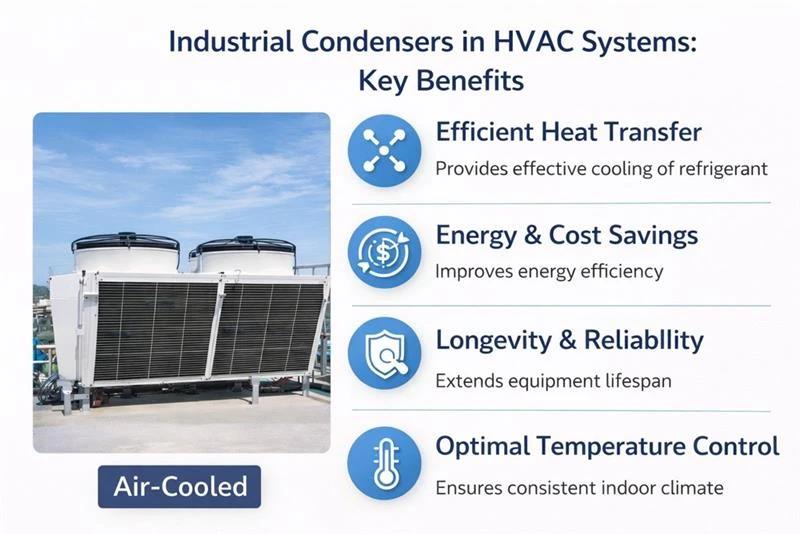
Industrial HVAC systems are designed to handle large cooling loads across manufacturing plants, commercial complexes, data centers, chemical facilities, and infrastructure projects. At the heart of these systems lies one critical component — the condenser. Without efficient heat rejection, even the most advanced HVAC setup cannot maintain performance or reliability.
In this blog, we’ll explore the role of industrial condensers in HVAC systems, their key benefits, applications, and why choosing the right condenser manufacturer is essential for long-term efficiency and operational success.
What Is an Industrial Condenser in HVAC Systems?
An industrial condenser is a heat exchanger that removes heat from refrigerant vapor and converts it into liquid form. In HVAC systems, this process enables continuous cooling by completing the refrigeration cycle efficiently.
The condenser works after the compressor stage. Hot, high-pressure refrigerant enters the condenser, releases heat into the surrounding medium (air or water), and condenses into a liquid before moving forward in the cycle.
In industrial HVAC systems, condensers must handle:
-
High cooling loads
-
Continuous operation cycles
-
Harsh operating environments
-
Energy efficiency demands
Role of Condensers in Industrial HVAC Systems
Industrial HVAC systems operate on a closed-loop refrigeration cycle involving four major components:
-
Compressor
-
Condenser
-
Expansion valve
-
Evaporator
Among these, the condenser plays a vital role by removing the heat absorbed from indoor environments. Efficient condensation ensures:
-
Stable cooling output
-
Lower compressor workload
-
Reduced energy consumption
-
Improved system lifespan
A poorly performing condenser can significantly reduce system efficiency and increase operating costs.
Key Benefits of Industrial Condensers in HVAC Systems
1. Enhanced Cooling Efficiency
Industrial condensers improve HVAC performance by effectively removing heat from the refrigerant. High-efficiency designs with optimized fin spacing, surface area, and airflow ensure maximum heat transfer.
When sourced from an experienced condenser manufacturer, modern units are engineered for superior thermal performance, even in high-demand industrial environments.
2. Energy Savings and Cost Efficiency
Energy consumption is one of the biggest concerns in large HVAC systems. Efficient condensers reduce compressor workload by maintaining optimal pressure levels.
This results in:
-
Lower electricity bills
-
Reduced energy wastage
-
Improved system COP (Coefficient of Performance)
Over time, energy savings significantly offset initial investment costs.
3. Reliable Performance in Demanding Conditions
Industrial environments often expose HVAC systems to:
-
High ambient temperatures
-
Dust and debris
-
Humidity and corrosion risks
Industrial-grade condensers are designed with durable materials and corrosion-resistant coatings, ensuring consistent performance under challenging conditions.
4. Scalability for Large Applications
Industrial HVAC systems vary widely in scale — from commercial buildings to manufacturing plants.
Condensers can be customized for:
-
High-capacity cooling systems
-
Modular HVAC setups
-
Process cooling applications
A reliable condenser manufacturer can tailor designs based on heat load requirements and installation constraints.
5. Reduced Maintenance Requirements
Modern industrial condensers are built for durability and ease of maintenance. Features such as removable panels, anti-corrosion coatings, and optimized airflow design minimize downtime.
Routine cleaning and inspection ensure long-term performance without frequent repairs.
6. Environmental Sustainability
With increasing focus on energy efficiency and emissions reduction, industrial condensers contribute to greener HVAC operations by:
-
Lowering energy consumption
-
Supporting eco-friendly refrigerants
-
Reducing carbon footprint
Advanced designs also optimize water usage in water-cooled systems.
Types of Industrial Condensers Used in HVAC Systems
Air-Cooled Condensers
These use ambient air as the cooling medium and are ideal for areas with limited water availability.
Advantages:
-
Easy installation
-
Lower infrastructure cost
-
Water conservation
Best for:
-
Commercial buildings
-
Warehouses
-
Light industrial facilities
Water-Cooled Condensers
These use water as the cooling medium and offer higher efficiency for large-scale systems.
Advantages:
-
Superior heat rejection
-
Lower noise levels
-
Better performance in hot climates
Best for:
-
Large industrial plants
-
Data centers
-
Process cooling systems
Applications of Industrial Condensers in HVAC Systems
Industrial condensers are widely used across sectors:
-
Manufacturing plants
-
Power stations
-
Chemical industries
-
Commercial complexes
-
Hospitals and airports
-
Data centers
Their versatility makes them essential for maintaining stable indoor environments in large facilities.
How to Choose the Right Condenser for HVAC Systems
1. Heat Load Requirements
Determine system capacity and operational load before selecting a condenser.
2. Installation Environment
Consider ambient temperature, dust levels, and available space.
3. Energy Efficiency Goals
Look for optimized designs that reduce power consumption.
4. Maintenance Needs
Select designs that are easy to service and maintain.
5. Manufacturer Expertise
Working with a trusted condenser manufacturer ensures reliable design, performance, and support.
Why Partnering with the Right Condenser Manufacturer Matters
Choosing the right manufacturer directly impacts system reliability and efficiency.
An experienced condenser manufacturer offers:
-
Custom engineering solutions
-
High-quality materials
-
Advanced testing standards
-
Reliable after-sales support
-
Long-term performance assurance
Partnering with experts ensures your HVAC system performs optimally across all conditions.
Conclusion
Industrial condensers play a vital role in HVAC systems by ensuring efficient heat rejection, energy savings, and consistent cooling performance. Whether air-cooled or water-cooled, selecting the right condenser and working with an experienced condenser manufacturer ensures long-term reliability and operational efficiency.
For industries relying on large-scale HVAC operations, investing in high-quality condenser technology is not just beneficial — it is essential.
FAQs
1. What does a condenser do in HVAC systems?
It removes heat from refrigerant vapor and converts it into liquid form.
2. Which condenser is better for industrial HVAC systems?
Water-cooled condensers are better for large systems, while air-cooled units suit smaller setups.
3. How often should condensers be maintained?
Regular inspections and cleaning every few months ensure optimal performance.
4. Can industrial condensers reduce energy costs?
Yes, efficient designs significantly reduce overall energy consumption.
5. Why choose a professional condenser manufacturer?
They provide customized solutions, high-quality construction, and reliable performance.