
How Engine Radiators Work: A Deep Dive
Posted on February 25, 2026
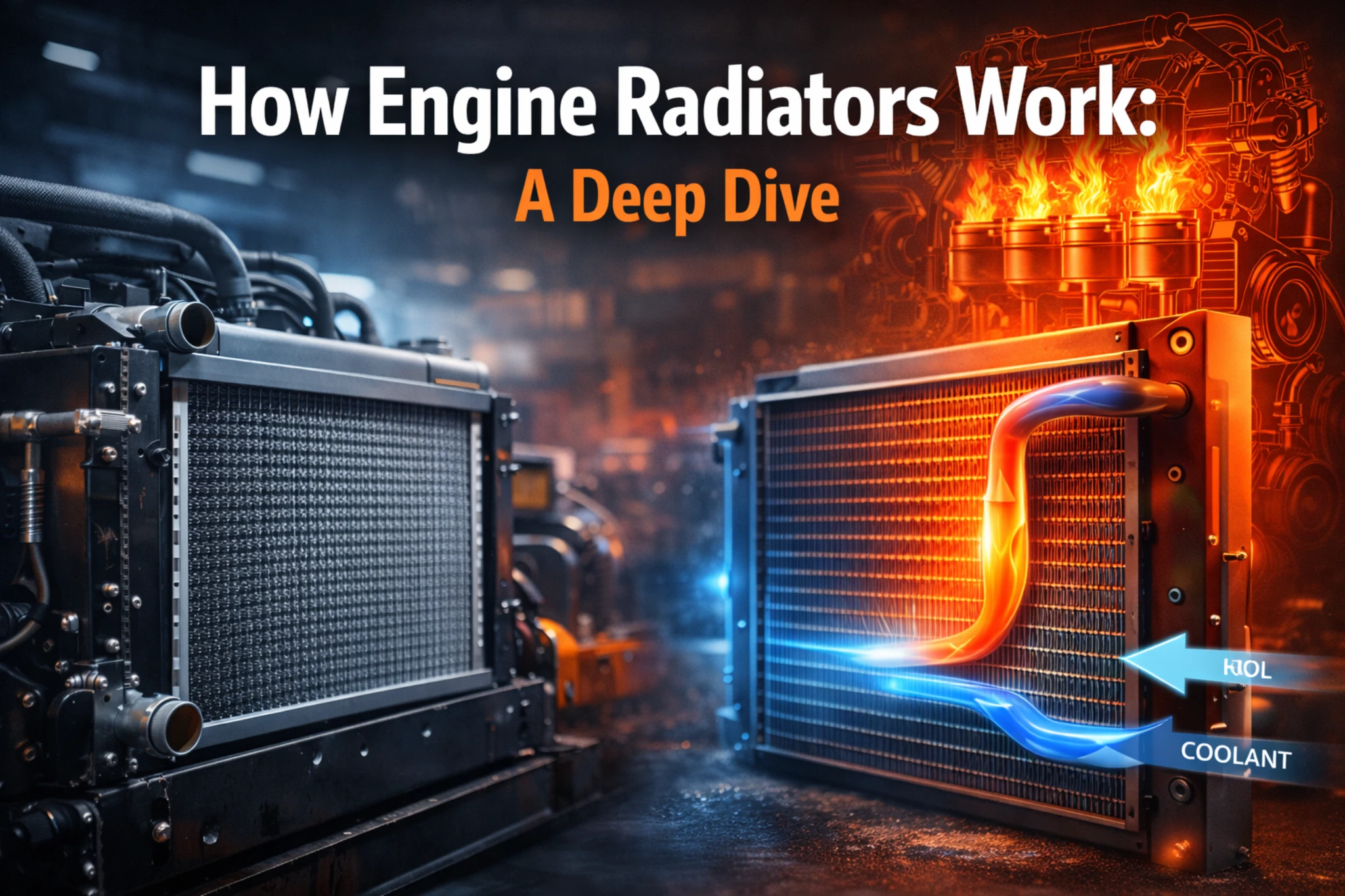
When it comes to engine performance, power often gets all the attention. But behind every high-performing engine is a highly efficient cooling system — and at the heart of that system sits the radiator.
Without a properly functioning radiator, even the most advanced engine can overheat within minutes. In this deep dive, we’ll break down exactly how engine radiators work, the science behind heat transfer, and why proper radiator selection is critical for industrial and heavy-duty applications.
Why Engines Need Cooling
Internal combustion engines generate extreme heat.
When fuel burns inside the combustion chamber, temperatures can exceed 2,000°C. Only a portion of that energy becomes mechanical power — the rest turns into heat.
If this heat isn’t managed:
-
Engine oil breaks down
-
Components expand excessively
-
Metal parts warp
-
Head gaskets fail
-
Complete engine seizure may occur
This is where the radiator becomes essential.
The Basic Principle: Heat Transfer
Radiators work on one simple principle:
Transfer heat from hot coolant to surrounding air.
This happens through three main heat transfer methods:
-
Conduction – Heat moves from the coolant to the radiator tubes.
-
Convection – Air flowing across fins removes heat.
-
Radiation – A small amount of heat dissipates naturally.
The majority of cooling happens via forced convection using airflow from a fan or vehicle movement.
Main Components of an Engine Radiator
Let’s understand the structure before diving into the working process.
Core
The core contains:
-
Tubes (carry hot coolant)
-
Fins (increase surface area for heat transfer)
This is where most heat exchange occurs.
Tanks (Top & Bottom / Side Tanks)
These hold coolant before and after circulation.
Inlet & Outlet
-
Inlet: Receives hot coolant from the engine.
-
Outlet: Sends cooled coolant back.
Pressure Cap
Maintains system pressure and prevents boiling.
Drain Plug
Used during maintenance.
Step-by-Step: How an Engine Radiator Works
Let’s break the cycle down clearly.
Step 1: Heat Generation
The engine burns fuel and generates heat.
Step 2: Coolant Circulation
A water pump pushes coolant through engine passages to absorb heat.
Step 3: Hot Coolant Enters Radiator
The heated coolant flows through the radiator inlet into thin tubes.
Step 4: Heat Transfer Begins
As coolant moves through tubes:
-
Heat transfers to aluminium or copper tubes.
-
Fins attached to tubes increase surface area.
Step 5: Air Removes Heat
A cooling fan or natural airflow passes across the fins.
This airflow carries heat away from the radiator.
Step 6: Cooled Coolant Returns
Coolant exits through the outlet and flows back to the engine.
The cycle repeats continuously while the engine runs.
Why Pressure Matters in Radiators
Radiators operate under pressure.
Why?
Increasing pressure:
-
Raises coolant boiling point
-
Prevents vapor formation
-
Improves thermal efficiency
For example:
At atmospheric pressure, the coolant boils at 100°C.
Under pressure, the boiling point increases significantly.
This allows engines to run at higher temperatures safely.
Types of Engine Radiators
Different applications require different radiator designs.
Aluminium Radiators
-
Lightweight
-
High heat transfer efficiency
-
Corrosion-resistant
-
Common in modern engines
Copper-Brass Radiators
-
Strong and repairable
-
Good for heavy-duty applications
-
Slightly heavier
Crossflow vs Downflow Design
-
Crossflow: Coolant flows horizontally.
-
Downflow: Coolant flows vertically.
Crossflow designs are more common in modern systems due to improved efficiency.
Role of Cooling Fans
Radiators depend on airflow.
There are two main types:
-
Mechanical fans (engine-driven)
-
Electric fans (temperature-controlled)
In heavy industrial equipment, high-capacity fans ensure adequate airflow even at low vehicle speeds.
What Affects Radiator Efficiency?
Several factors determine performance:
Core Thickness
Thicker cores increase heat rejection but may reduce airflow.
Fin Density
More fins = better heat transfer
But excessive density can trap dust in harsh environments.
Coolant Quality
Old coolant reduces heat transfer efficiency.
Airflow Design
Fan shroud design directly impacts cooling performance.
Radiator in Heavy-Duty & Industrial Machines
In industrial applications such as:
-
Construction equipment
-
Gensets
-
Agricultural machinery
-
Mining vehicles
Radiators are larger and built for extreme conditions.
They must handle:
-
Continuous load
-
High ambient temperatures
-
Dust and debris
-
Vibration
This is why industrial radiators are engineered with reinforced frames and optimized airflow channels.
Common Radiator Problems
Even small issues can cause major engine damage.
Overheating
Caused by clogged fins or coolant leaks.
Corrosion
Poor coolant quality leads to internal damage.
Leakage
Damaged tubes or cracked tanks.
Airflow Restriction
Dust and debris block fins.
Regular inspection prevents costly failures.
How Radiator Size Impacts Performance
Radiator size must match engine heat output.
If undersized:
-
Engine overheats
-
The fan runs continuously
-
Fuel efficiency drops
If oversized:
-
Unnecessary cost
-
Space constraints
-
Airflow inefficiencies
Correct thermal calculation is essential.
Radiator + Complete Cooling Package
In many industrial setups, radiators are integrated with:
-
Charge Air Coolers (CAC)
-
Oil Coolers
-
Intercoolers
-
Hydraulic Coolers
These combined cooling modules ensure complete thermal management.
How Modern Radiators Are Engineered
Advanced manufacturers use:
-
Thermal simulation software
-
Wind tunnel airflow testing
-
High-efficiency brazed aluminium cores
-
Pressure testing systems
This ensures maximum performance under real-world conditions.
Why Radiator Quality Determines Engine Lifespan
A high-quality radiator:
-
Reduces engine stress
-
Maintains stable temperature
-
Improves fuel efficiency
-
Minimizes downtime
-
Extends engine life
Cooling is not a secondary function — it is a primary reliability factor.
Conclusion
Engine radiators may seem simple, but their operation involves advanced heat transfer principles and precise engineering.
From absorbing extreme combustion heat to releasing it efficiently into the air, radiators play a critical role in maintaining engine health.
Understanding how they work helps you:
-
Diagnose problems early
-
Select the right radiator
-
Improve machine efficiency
-
Avoid costly breakdowns
In industrial and heavy-duty applications, investing in a high-performance radiator is not optional — it’s essential.
Frequently Asked Questions (FAQs)
1. How does coolant help in radiator cooling?
Coolant absorbs heat from the engine and transfers it to the radiator, where it is cooled by airflow.
2. Why do radiators use fins?
Fins increase surface area, allowing more heat to dissipate into the air.
3. What causes radiator overheating?
Clogged fins, coolant leaks, faulty thermostat, or poor airflow.
4. Can a radiator improve fuel efficiency?
Yes. Proper cooling maintains optimal combustion temperature, improving efficiency.
5. How long does an industrial radiator last?
With proper maintenance, high-quality radiators can last several years under heavy-duty conditions.