
Engine Running Hot but Radiator Feels Cold? How to Spot a Clogged Core
Posted on October 22, 2026
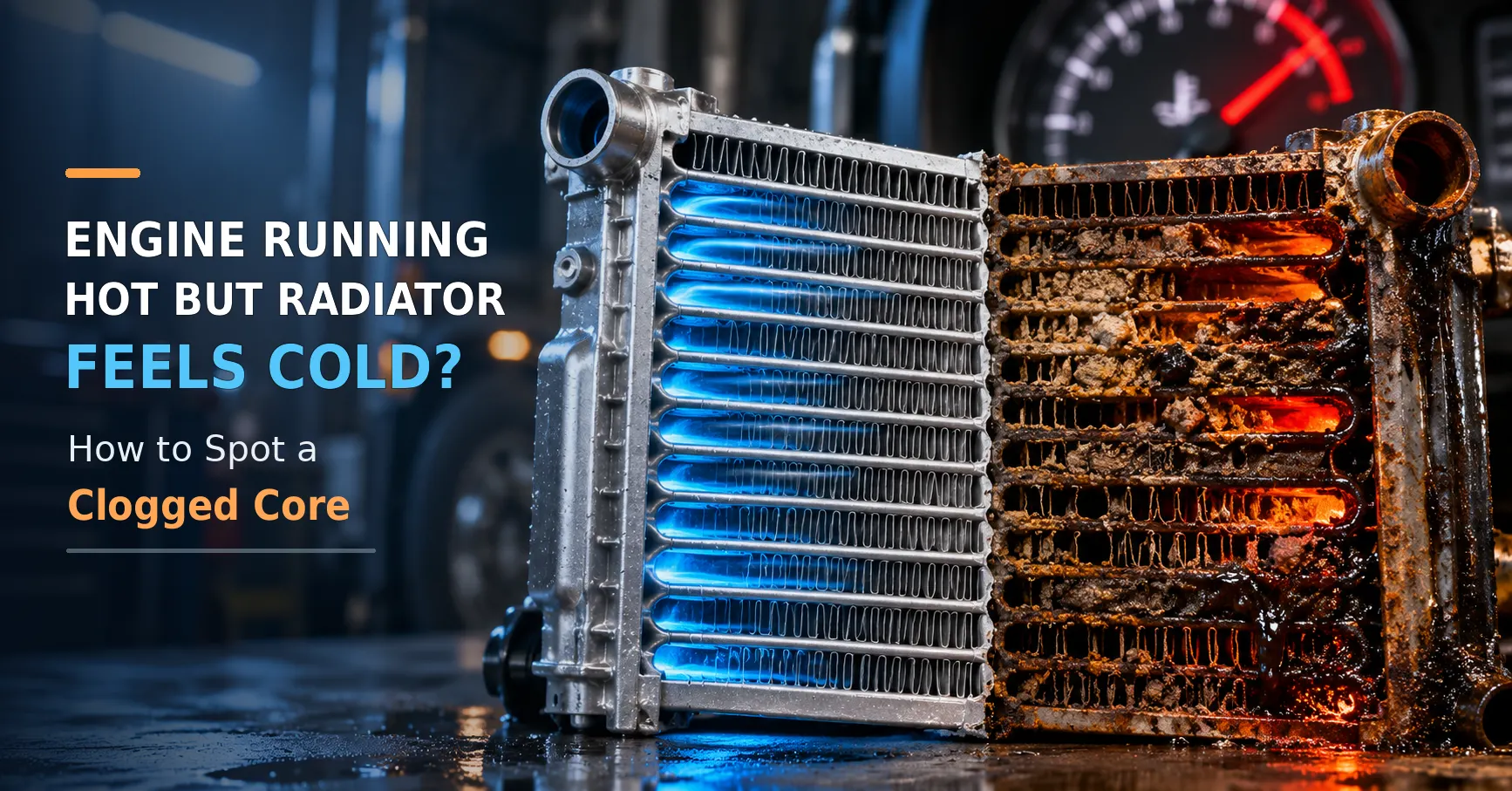
The temperature needle is climbing. You pop the bonnet (carefully, from a safe distance), touch the radiator, and it feels… cool. Almost calm.
That is the moment most drivers, fleet managers and plant technicians relax. They shouldn’t. A cold radiator on a hot engine is one of the clearest warning signs in any cooling system, and it usually means one thing: hot coolant is not reaching the part of the system built to cool it.
In this guide you will learn why it happens, how to tell a clogged core from other look-alike faults, how to run a ten-minute diagnosis with basic tools, and what to do next. Whether you drive a truck through Indian summers, run a genset, or maintain earthmoving equipment, the logic is the same.
Why a Cold Radiator on a Hot Engine Is a Red Flag
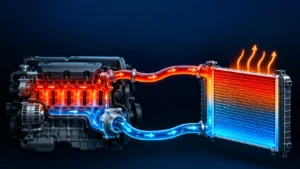
A radiator is a heat exchanger. Hot coolant leaves the engine, flows through the tubes of the core, gives its heat to the air passing over the fins, and returns to the engine cooler than it left.
Now think about what that means for what you feel:
- If coolant is flowing properly, the upper tank and upper hose are hot, the core warms evenly, and the lower hose is noticeably cooler.
- If coolant is not flowing, the radiator never receives the heat. It sits at near-ambient temperature while the engine cooks.
So a hot engine with a cold radiator is rarely a radiator that is “too good at cooling.” It is almost always a flow problem: something between the engine and the core, or inside the core itself, is blocking the circuit.
Quick reality check for diesels: A large diesel working lightly can hold its thermostat closed, so the radiator stays cool while the engine sits at normal operating temperature. If your gauge reads normal, a cool radiator may be perfectly fine. The concern is a gauge that climbs and a radiator that stays cold.
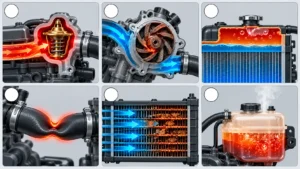
6 Causes of “Hot Engine, Cold Radiator”
A clogged core is a top suspect, but it is not the only one. Rule these out in order:
1. A stuck thermostat
The thermostat is a gate. If it fails closed, coolant circulates inside the engine only and never visits the radiator. Symptom: the upper hose is hot, but the radiator and lower hose stay cold. This is cheap and quick to test, so check it first.
2. A failing water pump
A worn impeller, a slipping belt or a cavitation-eroded pump can circulate too little coolant to move heat. The radiator stays cool because very little hot coolant ever reaches it.
3. An air lock or low coolant level
Air pockets after a coolant change can stop circulation entirely. Low coolant has the same effect and can also leave the temperature sensor reading falsely.
4. A collapsed lower hose
A hose that looks fine on the outside can collapse inwards under suction at higher revs. The temperature climbs with rpm, and the problem disappears at idle.
5. A clogged radiator core (the one we’re here for)
Scale, rust, sludge and debris narrow or seal the tubes. Coolant cannot pass, so the heat stays in the engine. We cover this in detail below.
6. Combustion gases in the coolant
A failing head gasket can push exhaust gas into the cooling system, forming bubbles and pressurising the circuit. If you also see white smoke, bubbling coolant or milky oil, read our guide on how to tell a failed oil cooler from a blown head gasket.
How a Radiator Core Actually Gets Clogged
The core is a dense network of narrow tubes and fins, and that is exactly what makes it efficient and exactly what makes it vulnerable. Blockages usually build up slowly, which is why the symptoms seem to appear overnight.
Common culprits inside the tubes:
- Scale and mineral deposits. Plain tap water in the coolant mix leaves calcium and magnesium deposits as it heats and cools. In regions with hard water, this can narrow tubes within a few seasons. Always mix concentrate with distilled or demineralised water.
- Rust and corrosion debris. Old, exhausted coolant loses its inhibitors. Rust flakes from the engine block travel to the radiator and lodge in the tubes.
- Coolant gelling and sludge. Mixing incompatible coolant chemistries can form a thick gel that coats the passages.
- Oil contamination. Oil leaking into the coolant (from a failed oil cooler or gasket) mixes into a sludge that clings to tube walls.
- Stop-leak additives. Quick fixes for small leaks can plug the tubes along with the leak.
Outside the core (a different problem with a different symptom):
Dust, mud, crop residue, grass and insects pack the fins and block airflow. This does not make the radiator cold. It makes it hot while the engine overheats because the air cannot carry heat away. If you work around dusty roads, farms or construction sites, clean the fins regularly. Our guide to preventing engine overheating in Indian summers covers airflow checks in detail.
Does core material matter?
Yes, in how each type fails and how it is repaired.
A copper brass radiator is soldered, so a radiator shop can often rod out clogged tubes, re-solder leaks or re-core it. Aluminium cooling systems are lighter and shed heat very quickly, but brazed aluminium cores are less forgiving of the wrong coolant, and when tubes clog or corrode the usual answer is replacement rather than repair. Neither material is “better” in every case. The right choice depends on duty cycle, climate, weight limits and budget.
Step-by-Step: How to Confirm a Clogged Core
You need an infrared thermometer (inexpensive and very useful), a torch, a bucket and basic hand tools.
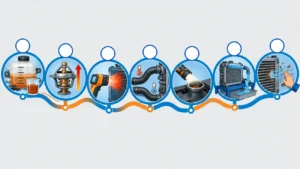
Step 1: Start cold. With the engine completely cool, check the coolant level and look at the coolant itself. Rusty brown, oily, milky or sludgy coolant means the core is probably contaminated.
Step 2: Check the thermostat first. Run the engine up to temperature and watch the upper hose. If the thermostat opens, you should feel the upper hose heat up quickly and the radiator begin to warm. If nothing changes while the gauge climbs, suspect the thermostat.
Step 3: Scan the core with the thermometer. Take readings across the face of the core, top to bottom and left to right. Even gradual cooling is healthy. Cold stripes or a sharp cut-off mean blocked tubes.
Step 4: Compare inlet and outlet. Measure the upper and lower hoses at the radiator connections. A very large gap between the two suggests the coolant is losing heat inside the radiator as it should. A tiny gap with a hot engine suggests little coolant is getting through at all.
Step 5: Look inside (engine cool, cap off). Shine a torch into the filler neck. Heavy scale, rust-coloured deposits or a sludgy coating confirm internal fouling.
Step 6: Check the drain flow. With the engine cool, open the drain and watch the flow. A weak trickle, or coolant that drains cool while the engine was running hot, points to a blocked core.
Step 7: Clear the outside. Blow or rinse the fins from the engine side outwards to rule out an airflow problem before condemning the core.
So You Have a Clogged Core. What Now?
| Situation | Recommended action |
| Light scale, coolant otherwise healthy | Chemical flush with a suitable cleaner, then refill with correct coolant and distilled water |
| Moderate blockage | Reverse flush (water forced against the normal flow direction) at a radiator service shop |
| Heavy blockage in a copper brass core | Professional rodding or re-coring |
| Heavy blockage, corrosion or leaks in an aluminium core | Replace the radiator |
| Repeated overheating after a clean-out | Replace the core and investigate the root cause (coolant quality, oil contamination, pump or head gasket) |
Two important rules:
- Fix the root cause. A new radiator in a system full of rust and sludge will clog again. Flush the engine side, replace the thermostat if it is old, and use the right coolant.
- Do not keep driving or running hot. An overheated engine can warp the cylinder head or blow the gasket. Repairs cost far more than a radiator.
Choosing a Replacement Core: What Actually Matters
Not all replacement radiators cool equally. When you compare options, look at tube count and wall thickness, fin density, brazing or soldering quality, tank design and how the unit is tested. A trustworthy radiator core manufacturer should be able to show you pressure testing, leak testing and thermal performance data, not just a price list.
That is the standard NBR Cooling Systems builds to. With over 40 years in radiators, condensers, oil coolers and charge air coolers, its Pithampur facility runs in-house controlled-atmosphere brazing, wind tunnel and helium leak testing, and holds IATF 16949 and ISO 9001:2015 certifications. Every core is built to OEM-grade standards for trucks, generators, construction equipment, buses and industrial use.
Prevention Checklist: Keep the Core Flowing
- Use distilled water with the coolant concentrate, never plain tap water
- Use the coolant type your manufacturer specifies, and never mix chemistries
- Replace coolant on schedule, since inhibitors wear out
- Fix leaks properly instead of using stop-leak additives
- Replace the thermostat and radiator cap during major cooling service
- Clean the fins regularly in dusty or agricultural environments
- Investigate any oil in the coolant straight away
- Scan the core with an infrared thermometer at every service, which takes under a minute
The Bottom Line
A hot engine with a cold radiator is your cooling system telling you that heat has nowhere to go. Rule out the thermostat, pump, hoses and air locks first, then use the touch-and-temperature test to confirm whether the core itself is blocked. Catch it early and you may need only a flush. Ignore it and you could be looking at a ruined engine.
Need a replacement radiator, a custom core or expert advice on a cooling problem? Talk to our team at NBR Cooling Systems for OEM-grade cooling solutions built for the toughest operating conditions.
FAQs
Can a radiator be clogged even if there are no leaks?
Yes. Internal clogging restricts flow without causing leaks, which is why the engine can overheat while the system looks perfectly intact. Check coolant condition and the temperature pattern across the core instead of waiting for a leak.
Is a cool radiator always a bad sign?
Not always. In cold weather, or on a lightly loaded engine, the thermostat may stay mostly closed and the radiator will feel cool while the gauge reads normal. It becomes a problem when the gauge climbs or the engine overheats at the same time.
Will a radiator flush fix a clogged core?
It can, if the blockage is light scale or sludge and you use a cleaner suited to your core material. Heavy deposits, corrosion or crushed tubes need professional cleaning, re-coring or replacement.
Can I just remove the thermostat to fix overheating?
No. It may hide the symptom for a while, but it disrupts how the engine regulates its temperature and can cause other problems, so it is not a fix.
What should I do if my engine overheats on the road?
Pull over safely, switch the engine off and let it cool fully before opening the bonnet. Never open the radiator cap while it is hot. If coolant is low, top up only once the engine has cooled, and have the cause diagnosed before driving on.
How often should I check my radiator?
A quick temperature scan and coolant check at every service interval, plus a visual check of the fins before summer, is a good habit.