
Copper vs Aluminium Coil: The Hidden Difference That Could Change Your AC Performance
Posted on November 12, 2026
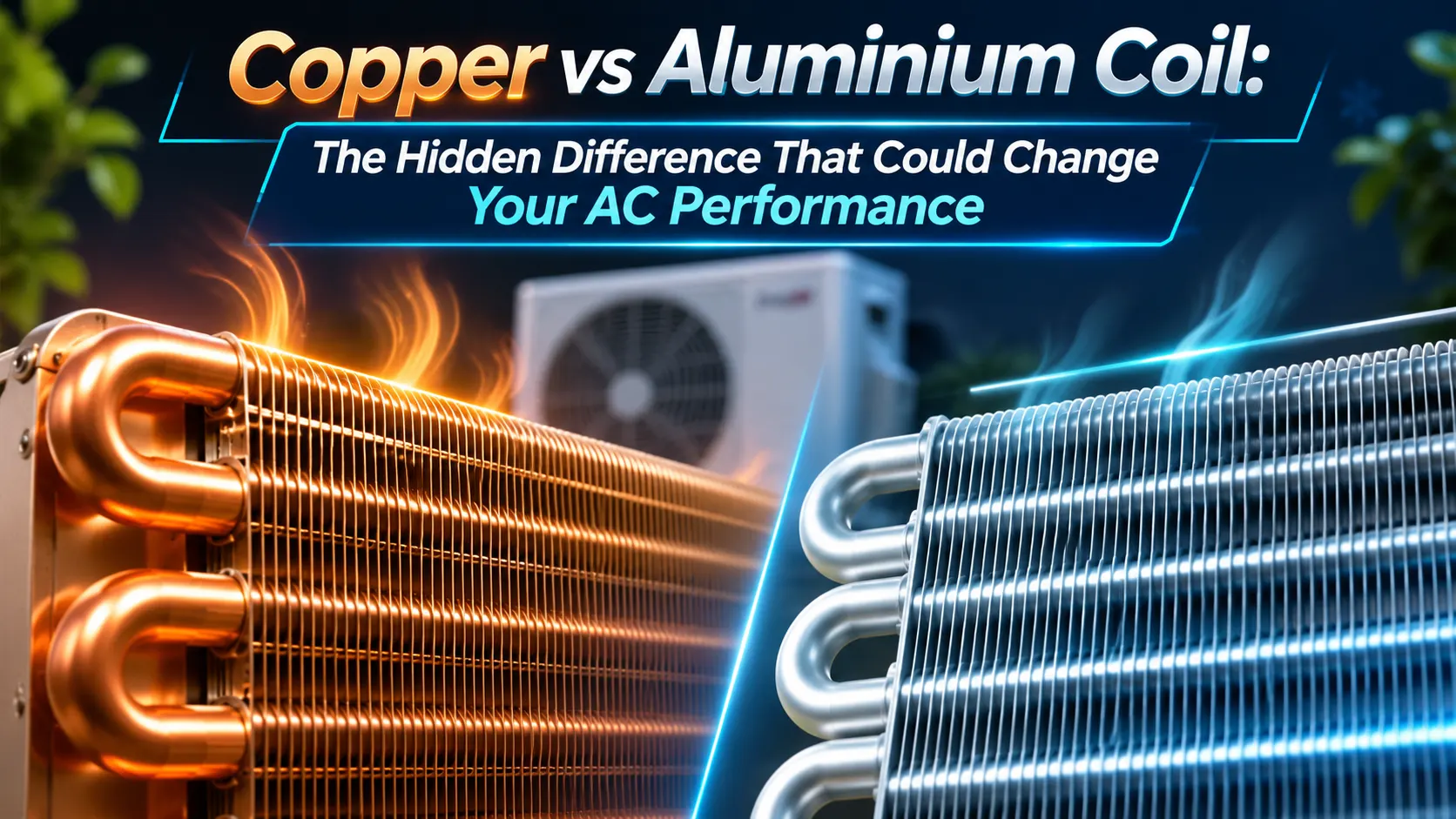
Walk into any AC showroom in India and ask which coil is better, and you’ll hear the same confident line: “Copper is pure, aluminium is cheap.” It sounds convincing. It’s also only half the story. The truth is that the metal inside your outdoor unit quietly decides how hard your compressor works, how big your power bill gets, and how long your AC survives a Mumbai monsoon or a Chennai summer. So before you pay extra for copper, or trust a cheaper aluminium unit, here’s what the spec sheet never tells you.
Copper coils conduct heat better and are easier to repair, so they suit buyers who want simple servicing. Aluminium coils are lighter, cheaper, and when designed and coated properly they resist corrosion very well, which is why modern inverter ACs are moving towards them. Neither wins everywhere. The right pick depends on your climate, your budget and how long you plan to keep the unit.
Why the Coil Material Matters More Than You Think
The coil is where your AC either rejects heat or struggles to. In the outdoor unit, the condenser coil takes the heat the refrigerant has collected inside your room and hands it to the outside air. If that coil is inefficient, clogged or corroded, the compressor works harder, power bills climb and cooling slows down. So the material the coil is made from quietly decided efficiency, durability and repair cost for the next ten years.
Copper Coil vs Aluminium Coil at a Glance
| Factor | Copper Coil | Aluminium Coil |
| Heat transfer | Higher conductivity, roughly twice that of aluminium | Lower conductivity, offset by design |
| Weight | Heavy | Roughly a third of copper’s weight for the same volume |
| Upfront cost | Higher | Lower |
| Corrosion behaviour | Strong in most settings, but copper-aluminium joints can corrode galvanically | Naturally forms a protective oxide layer; coatings improve it further |
| Repairability | Easy to braze in the field | Needs specialised repair, often replacement |
| Strength | Tougher against dents and vibration | Softer, needs good cabinet protection |
| Best for | Easy servicing, rough handling | Lighter units, lower cost, humid or coastal air with proper coating |
Heat Transfer: Copper Wins on Paper, Design Closes the Gap
Copper is the better conductor, and that is simply physics. But conductivity is only one part of how a condenser performs. Engineers make up the difference in aluminium coils with extra surface area, better fin design and optimised airflow. This is why a well-designed aluminium air conditioner condenser can match the real-world performance of a copper unit, even though the raw metal conducts less heat. Judge the whole coil design, not just the metal.
Cost and Weight: Why Manufacturers Keep Choosing Aluminium
Copper is expensive and dense. Aluminium is cheaper and far lighter, which means:
- Lower manufacturing cost, which keeps the AC price down.
- Easier handling, shipping and installation, especially for rooftop and wall-mounted outdoor units.
- Less load on brackets and mounts over time.
- Easier recycling, which matters as sustainability rules tighten.
Copper also needs more material to build a coil of the same size, so price swings in the copper market hit the final product harder.
Corrosion: The Question Indian Buyers Should Ask First
If you live near the coast in Mumbai, Chennai, Kochi or Visakhapatnam, or anywhere with heavy humidity and monsoon moisture, corrosion decides how long your outdoor unit survives. Here is the part most blogs get wrong:
- Aluminium is not weak against corrosion. It forms a thin oxide layer that protects it, and anti-corrosion coatings add another barrier.
- Copper is strong, but mixed metals are the risk. A copper tube joined to aluminium fins creates a galvanic pair, and in salty or polluted air that junction can break down first.
- All-aluminium designs avoid that mismatch. With no dissimilar metals touching, galvanic corrosion has far less to work with.
Whichever you choose, rinse the outdoor unit regularly if you are near the sea, because salt on the fins does damage regardless of material.
Repair: Where Copper Still Has a Real Edge
This is the genuine advantage of copper, and it is worth being honest about it. A leaking copper tube can usually be brazed on site by a local technician with a torch. Aluminium leaks need more specialised skill and equipment, and many service shops will simply recommend replacing the coil. If your area has limited access to skilled AC technicians, this matters. If your coil is well protected and professionally installed, the odds of needing a repair drop sharply.
Lifespan: Maintenance Beats Metal
A well-maintained copper coil and a well-maintained aluminium coil can both run for many years. A neglected coil of either kind will fail early. What actually shortens coil life:
- Dust and grime packed between the fins
- Bent or crushed fins that block airflow
- Salt, industrial fumes and standing moisture
- Poor installation and vibration at the tube joints
Cleaning the condenser before every summer does more for lifespan than the metal choice ever will.
The Third Option Most Buyers Never Hear About
The real choice today is no longer just copper versus aluminium. Microchannel designs use flat aluminium tubes with many tiny channels and louvered fins, which gives a larger heat-exchange surface in a smaller, lighter coil. They usually need less refrigerant charge, and because the whole coil is aluminium, there is no copper-aluminium joint to corrode. That is why the industry is shifting this way, particularly for inverter ACs and commercial systems.
So, Which One Should You Choose?
- Pick copper if you want easy field repair, your area has few specialised technicians, or the unit will face rough handling and vibration.
- Pick aluminium if you want a lighter, lower-cost unit, you live in a humid or coastal zone and the coil comes with proper anti-corrosion treatment.
- Pick microchannel if efficiency, compact size and lower refrigerant charge matter most, especially for inverter and commercial use.
- Check the coating and build quality before you worry about the metal, because a poorly made copper coil will lose to a well-made aluminium one.
For OEMs and Commercial Buyers: What to Look for in a Supplier
If you are sourcing coils for a product line or a commercial project, the metal is only the first question. A good Air Cooled Condenser Manufacturer should be able to answer these without hesitation:
- Which brazing process do you use, and how is every unit leak-tested and pressure-tested?
- What corrosion protection and coating options do you offer for coastal or industrial air?
- Can you customise fin density, size and circuiting for my airflow and capacity?
- Do you support OEM volumes with consistent quality batch after batch?
That is the thinking behind every aluminium ac condenser we build at nbrcoolingsystem, from precision brazing to leak and pressure testing, built for Indian heat, dust and humidity.

The Real Winner Depends on Your Cooling Needs
Choosing between copper and aluminium AC coils isn’t about finding one clear winner—it’s about selecting what works best for your cooling needs. Copper offers durability and easier repairs, while aluminium and microchannel coils provide lightweight construction, cost efficiency, and corrosion resistance when properly designed. Factors like climate, maintenance, and budget play an important role in making the right choice. With NBRCoolingSystem, choosing quality-tested cooling solutions and maintaining your AC properly can help ensure reliable performance, efficient cooling, and long-term value.
FAQs
Is a copper coil better than an aluminium coil in an AC?
Copper conducts heat better and is easier to repair, but aluminium is lighter, cheaper and corrosion resistant when properly coated. Neither is better in every case.
Do aluminium coils corrode faster than copper?
Not necessarily. Aluminium forms a protective oxide layer, and coated or all-aluminium designs perform well in humid conditions. Mixed copper-aluminium joints are often the more corrosion-prone point.
Can an aluminium AC coil be repaired?
Yes, but it needs specialised equipment and skill, so replacement is often chosen. Copper coils are simpler to repair on site.
Which coil lasts longer?
With regular cleaning and good installation, both can last many years. Maintenance and environment matter more than the metal itself.
Why are new inverter ACs using aluminium or microchannel coils?
They reduce weight and cost, avoid copper-aluminium galvanic corrosion and can achieve strong heat transfer through better surface design.
Does coil material change electricity bill?
Yes, but indirectly. Copper and aluminium coils differ in heat transfer efficiency, which can affect energy consumption. However, AC design, energy rating, maintenance, and usage habits have a much greater impact on your electricity bill.
Is it safe to keep running an AC with a leaking coil?
No, running an AC with a leaking coil is not recommended. Refrigerant leaks reduce cooling efficiency, increase electricity consumption, and may damage the compressor. Turn off the AC and have a qualified technician inspect and repair the leak.