
How to Properly Clean and Maintain a Microchannel Condenser Coil
Posted on September 22, 2026
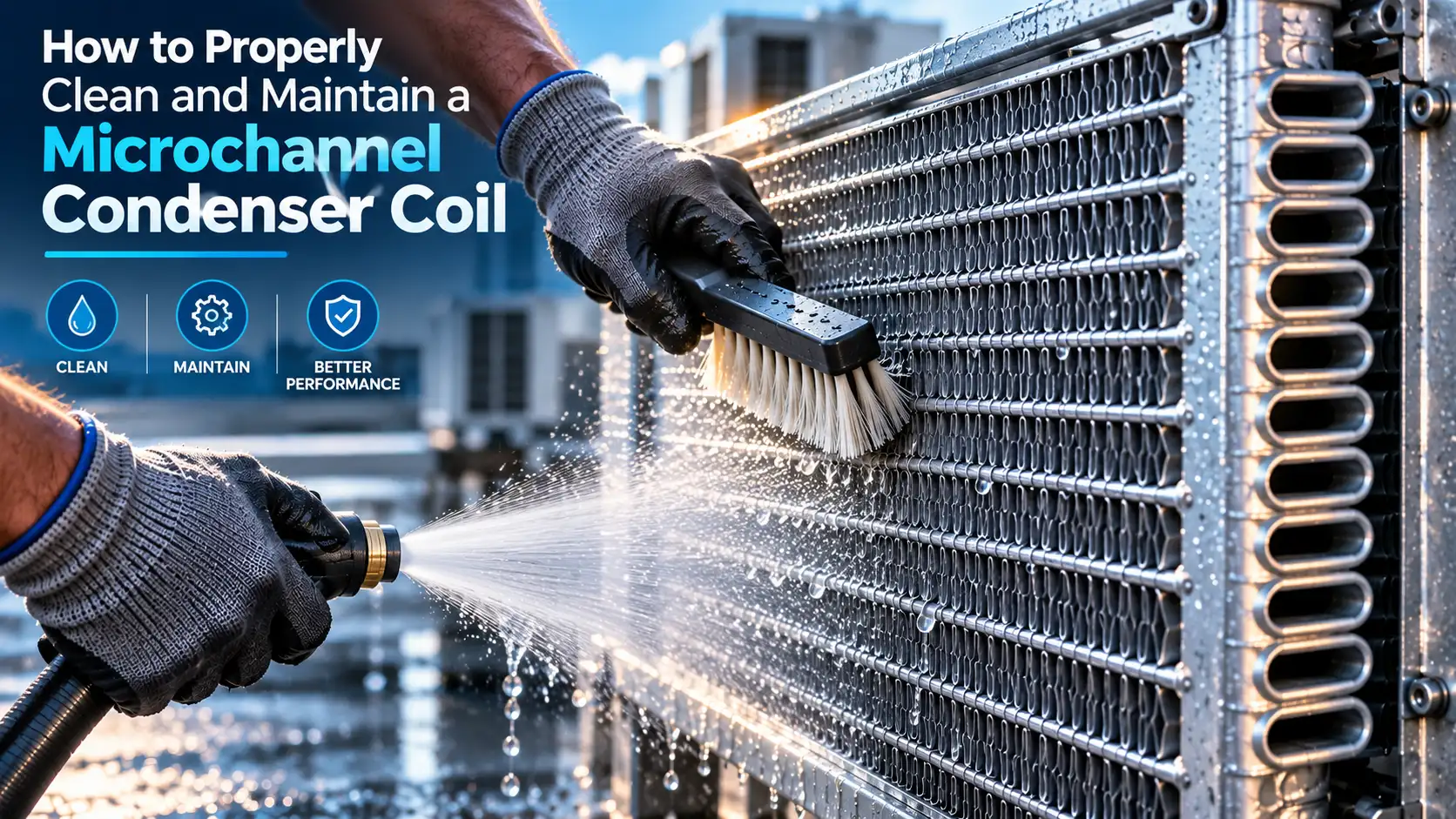
How to Properly Clean and Maintain a Microchannel Condenser Coil
Walk up to almost any modern rooftop unit, chiller, or split system built in the last decade, and there’s a good chance you’re looking at a Microchannel Condenser — flat aluminum tubes, wavy louvered fins, more compact than the copper-and-aluminum coils it replaced. It’s a genuine leap forward in heat transfer efficiency. But here’s the catch most people don’t realize until it’s too late: you cannot clean a microchannel coil the same way you’d clean a traditional one.
Treat an MCHX Condenser like an old-school fin-and-tube coil — blast it with a high-pressure washer, scrub it with a stiff brush, or hose it down with the wrong chemical — and you’re not cleaning it. You’re damaging it, sometimes permanently. This guide walks through exactly how to do it right.
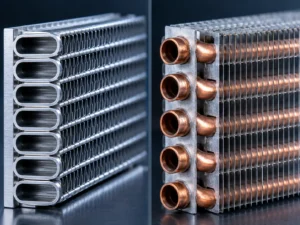
Why Microchannel Coils Need a Different Approach
A microchannel coil isn’t just a smaller version of a traditional condenser — it’s built differently at a structural level, and that changes everything about how it should be handled:
- Thinner tube depth and tighter fin spacing mean dirt and debris build up differently, and the coil can look clean on the surface while still being restricted underneath
- The refrigerant channels run all the way to the edge of the coil — unlike round copper tubing, there’s very little margin for error if something hits the fin face
- All-aluminum construction is more reactive to the wrong cleaning chemicals than copper-aluminum coils, and can corrode or degrade quickly if treated with the wrong product
- Flat, parallel tube geometry actually works in your favor once you know the right technique — it gives cleaning water a straighter, less obstructed path through the coil than traditional coils allow
Understanding why the coil is different is what makes the “how” make sense. Let’s get into it.
Step-by-Step: How to Clean a Microchannel Condenser Coil Correctly
- Cut power to the unit first. Always start here — no exceptions, no shortcuts.
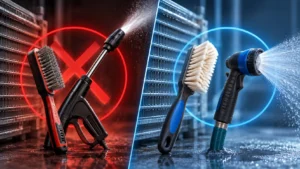
- Remove loose surface debris before any water touches the coil. Use a soft-bristle brush or a vacuum with a soft brush attachment — never a wire brush, never a metal vacuum nozzle, and never anything hard enough to bend or puncture a fin.
- Brush in the direction of the fins, not against them. Working longitudinally along the fin pattern (rather than side to side) significantly reduces the risk of bending or crushing the delicate fin structure.
- Rinse with low-pressure water. This is the single most important rule in this entire process. A garden hose or a low-pressure fan-pattern sprayer is almost always the safer choice — high-pressure washers can tear through microchannel fins in a way they simply can’t with sturdier round-tube coils. If a pressure washer must be used, keep it well under the pressure threshold your specific coil manufacturer recommends, and always spray at an angle rather than straight into the coil face.
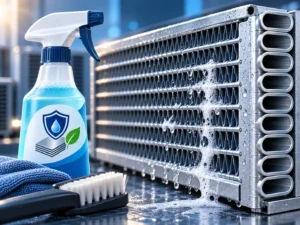
- Think twice before reaching for a chemical cleaner. This is where guidance genuinely differs across manufacturers — some explicitly prohibit any chemical or detergent on microchannel coils entirely, while others permit cleaners specifically labeled as aluminum-safe or microchannel-compatible. The safest move is always to check the exact guidance for your coil’s manufacturer before applying anything beyond plain water — this is not a step to guess on.
- Remove trapped water after rinsing. Water left sitting inside a microchannel coil isn’t just cosmetic — in some system types, it can affect performance or freeze in cold conditions. Running the condenser fan briefly or using a hand-held air blower after rinsing helps clear it out properly.
- Inspect before closing everything back up. If the coil still looks dirty or airflow still feels restricted, repeat the rinse rather than reaching for a harsher method.
What NOT to Do — The Non-Negotiables
- ❌ Never use a stiff wire brush or a metal tool anywhere near the coil face
- ❌ Never blast it with a high-pressure washer without confirming the safe PSI limit for that specific coil
- ❌ Never assume “the cleaner I always use” is safe — an unapproved chemical can strip protective coatings or trigger corrosion on aluminum surfaces
- ❌ Never let debris from nearby repair work fall into open tubing — anything that gets into the pipework during a compressor swap or line repair will hit the condenser coil before it reaches the filter/drier, and microchannel passages clog far more easily than round tubing
- ❌ Never pump a system down through a microchannel condenser as part of routine service — this is a separate, safety-critical rule on its own, and one worth knowing before any maintenance work begins.
How Often Should a Microchannel Condenser Be Cleaned?
There’s no single universal number — it depends heavily on environment. A rooftop unit in a dusty industrial zone, a coastal installation dealing with salt exposure, or a unit near heavy foliage all accumulate debris at very different rates. As a practical habit:
- Do a visual inspection every few months as part of routine HVAC servicing
- Clean proactively when airflow feels reduced or the system seems to be working harder than usual — don’t wait for a full failure
- In high-debris or coastal environments, build cleaning into a regular seasonal maintenance schedule rather than reacting only when there’s a visible problem
The Bigger Picture: Maintenance Starts With the Right Coil
Here’s something worth sitting with: no amount of careful cleaning fully makes up for a poorly engineered coil to begin with. Fin spacing, tube wall thickness, coating quality, and brazing precision all determine how forgiving — or unforgiving — a microchannel coil is over its lifetime. This is exactly why working with a serious Condenser Manufacturer for HVAC Systems matters as much as the maintenance routine itself.
As a manufacturer building precision MCHX Condensers, NBR Cooling Systems approaches coil design with exactly this lifecycle in mind — because a coil that’s engineered well from the start is simply easier, safer, and less costly to maintain for years to come. Good maintenance habits and good manufacturing aren’t separate conversations; they’re the same conversation, just at different stages of a coil’s life.
FAQs
Can I use a regular pressure washer on a microchannel condenser?
Only if you know the specific PSI limit approved for that coil, and even then, low pressure with an angled spray is far safer than a direct high-pressure blast. When in doubt, a garden hose is the safer default.
Is it okay to use any coil cleaner on a microchannel coil?
Not automatically. Some manufacturers prohibit chemical cleaners on microchannel coils entirely, while others allow products specifically labeled aluminum-safe or microchannel-compatible. Always confirm before applying anything beyond water.
Why do microchannel coils need more careful cleaning than traditional coils?
Their thin, flat-tube construction and tightly spaced fins are more easily damaged by hard tools, high water pressure, or harsh chemicals than the sturdier round-tube design of traditional copper-aluminum coils.
How do I know if my condenser is a microchannel coil?
If it looks like a car radiator — flat tubes with wavy fins between them, rather than round tubes threaded through flat metal fins — it’s almost certainly a microchannel design.
Should a microchannel coil be cleaned from the inside out?
Yes — cleaning from the inside out is the recommended direction, as it pushes trapped debris out rather than driving it deeper into the fins.
How often should a microchannel condenser coil be cleaned?
There’s no fixed schedule — it depends on the environment. Do a visual check every few months as part of routine servicing, and clean proactively if airflow feels reduced. Coastal, dusty, or high-debris locations need a tighter seasonal cleaning schedule rather than waiting for visible problems.
Can dirty microchannel coils cause high head pressure?
Yes — a dirty coil restricts airflow and reduces heat rejection, forcing the system to work harder and pushing head pressure up.Because microchannel coils have tighter fin spacing, even moderate debris buildup can affect airflow faster than on a traditional coil.