
Is It True Aluminium AC Condensers Can’t Be Repaired if They Leak?
Posted on September 5, 2026
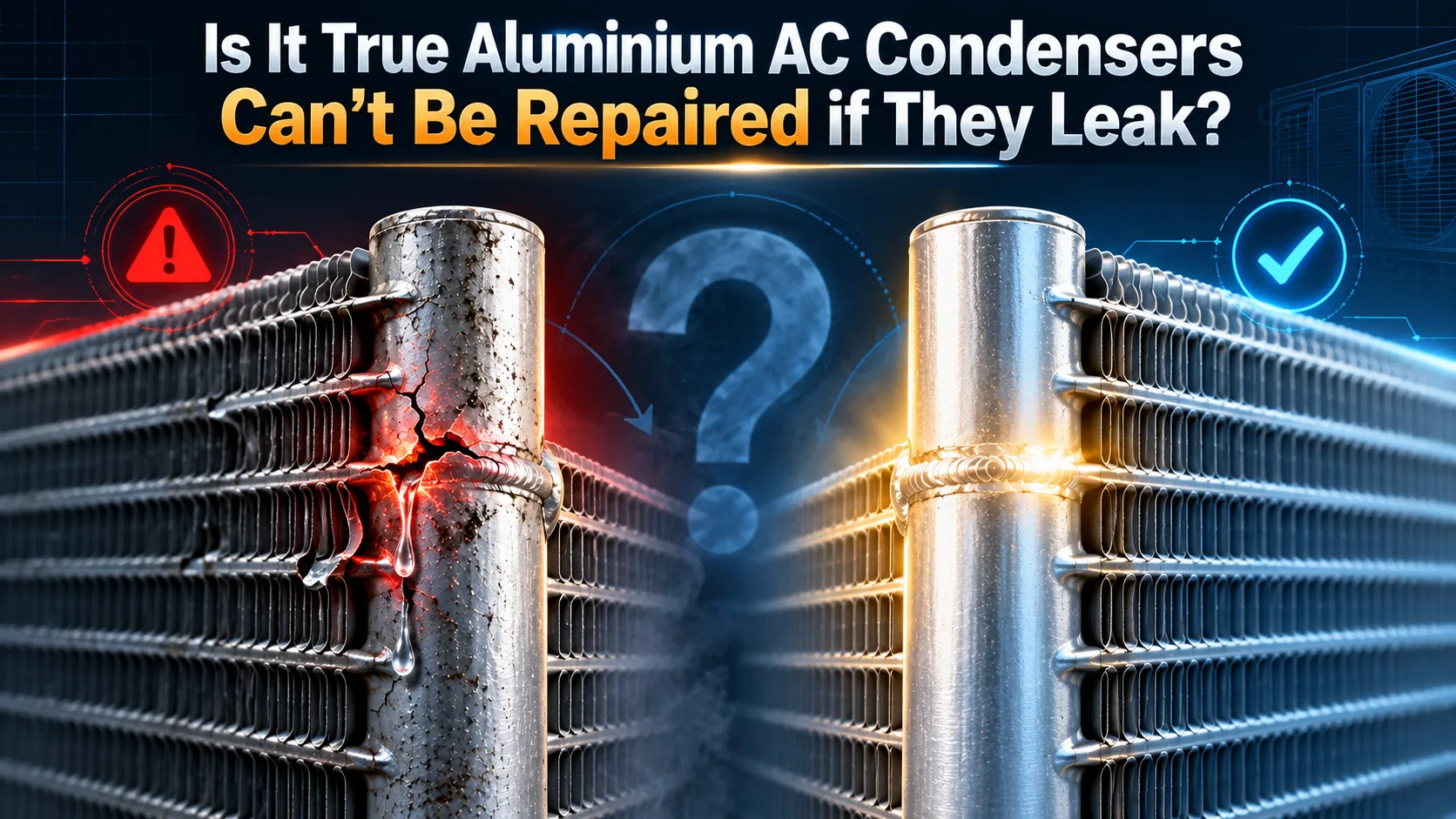
Ask a tech who has been doing this for twenty years and you will probably get a flat, confident answer — “Nope. Aluminium AC condenser leaks, unit’s toast.” Ask around a specialty welding forum instead and you will find people happily patching aluminium radiators, intercoolers, and AC lines like it is just another Tuesday. The debate around whether an aluminium AC condenser can be repaired or needs replacing has been going on for decades — and the answer is far more nuanced than most people realise.
So which one is actually right?
Honestly — neither, on its own. The real answer is that it depends entirely on what broke and how the unit was built in the first place. Before you panic, call a replacement quote, or write off a condenser that might have years of life left in it, it is worth understanding where this myth actually came from — because the origin story explains almost everything.
Where This Myth Actually Comes From
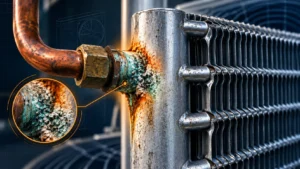
This did not come out of nowhere. Back in the 1980s, when GE first introduced all-aluminium condensing coils into the AC market, technicians ran into a real and well-documented problem:
- Leaks kept appearing at the exact point where aluminium tube met copper components
- The culprit was galvanic corrosion — what happens when two dissimilar metals sit in contact with each other over time
- The tools and techniques available at the time could not reliably fix these joints once they started going
- The industry’s response was blunt — cut it out and replace the whole unit
That reputation never really left. Decades later, technicians still repeat it word for word even though the manufacturing behind modern condensers has moved on considerably. The advice made sense in 1985. Applying it without question in 2026 is where the problem starts.
So What Is the Real Answer?
It depends entirely on what kind of damage you are actually looking at. There is no single answer that covers every situation — and that is exactly what the myth gets wrong.
Here is how to think about it:
When repair is genuinely a viable option:
- Small leaks or punctures on standard aluminium tubing
- Single-point damage on thicker-walled aluminium sections
- Damage that has not spread to multiple areas of the coil
- Situations where the joint or fitting is the problem rather than the core itself
When replacement is almost certainly the better call:
- Microchannel condenser cores with punctures or serious corrosion
- Damage spread across multiple points in the coil
- Corrosion that has eaten into the structural integrity of the fin or tube surface
- Situations where the repair cost is climbing toward or past half the replacement cost
The repair industry built around aluminium is real and proven. Aluminium brazing, flux-core rods, controlled torch heat, proper surface preparation — these are established techniques for repairing aluminium AC lines, radiators, and thin-walled heat exchangers. Products like Lucas Milhaupt’s AL822 exist specifically for this purpose — joining and repairing both aluminium-to-aluminium and aluminium-to-copper connections in HVAC and refrigeration systems, flowing at around 900°F with a built-in flux core.
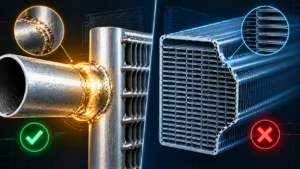
Microchannel condenser cores are a completely different conversation. This is where the “can’t be repaired” claim actually holds up. Modern multi-flow microchannel condensers pack extremely thin, tightly bundled internal channels — the exact design that makes them lighter and more efficient also makes them nearly impossible to patch reliably. With core punctures or serious corrosion on a microchannel design, replacement is realistically your only option.
So the myth is not entirely wrong. It is just aimed at the wrong target. It is not that an aluminium AC condenser itself cannot be fixed — it is that microchannel-style construction specifically is a nightmare to patch, while standard thicker aluminium tubing usually is not.
The 50 Percent Rule Worth Actually Remembering
Just because a repair is technically possible does not automatically make it the smart call. There is a rough industry benchmark worth knowing before you commit to either path:
The 50 Percent Rule: If the total cost of fixing the current condenser — labour, refrigerant recovery, recharging, all of it — adds up to more than half of what a brand-new unit would cost you, replace it.
This matters more than most people realise because a significant number of AC problems that feel like total condenser failure are actually something much smaller. Things like:
- A dead fan motor — completely unrelated to the aluminium core
- A blown capacitor — cheap to replace, nothing to do with the condenser itself
- Dried-out O-rings — a seal issue, not a structural one
- A worn seal washer — another quick fix that gets misread as a bigger problem
- Loose fittings — not a core failure at all
None of these touch the aluminium core. None of them should push you toward full replacement. It is really only when corrosion has spread wide or the core has multiple punctures that replacement genuinely becomes your best move. Diagnosing what you are actually dealing with before making that call saves money almost every time.
What This Means When You Are Shopping for One
Here is the part that should genuinely change how you think about this whole debate — the real problem was never aluminium as a material. It was how well the condenser was built in the first place.
A sloppy, unprotected aluminium-to-copper joint from 1985 and a properly engineered aluminium AC condenser with real corrosion protection today are not the same product. Same base metal. Wildly different outcomes.
What separates a condenser that holds up from one that becomes a repair headache:
- The right aluminium alloy selected for the operating environment
- Protective coating applied to the fin and tube surfaces before installation
- Quality-controlled joints that were properly checked at the manufacturing stage
- Design that accounts for the specific corrosion risks of the installation environment
- Proper separation or insulation of aluminium-to-copper connections to prevent galvanic corrosion from the start
This is exactly why choosing an experienced aluminium air conditioner condenser manufacturer in India matters just as much as knowing your repair options after something has already gone wrong. A condenser engineered and built correctly from day one is far less likely to develop the kind of leak that started this myth in the first place — which means less repair anxiety, fewer surprise failures, and a longer useful service life.
NBR Cooling Systems builds around exactly this idea. Every condenser is engineered to resist the specific failure modes that gave aluminium its bad reputation decades ago:
- Galvanic corrosion resistance — proper alloy selection and joint design that prevents the dissimilar metal problem from developing
- Protective coatings — epoxy and hydrophilic fin coatings for installations in coastal, humid, or chemically aggressive environments
- Quality-controlled construction — joints and connections built and verified to hold under real operating conditions, not just on a test bench
- Indian climate engineering — designs built around the specific demands of high ambient temperatures, variable power quality, and dust-heavy industrial environments across India
The difference between a condenser that earns its bad reputation and one that runs reliably for fifteen years comes down to how it was designed and who built it — not the material itself. As one of the leading aluminium air conditioner condenser manufacturers in India, NBR Cooling Systems brings that engineering discipline to every unit that leaves the facility.
The Bottom Line
Aluminium AC condensers absolutely can be repaired — much of the time. Here is the quick version of everything covered above:
Key takeaways:
- Small leaks and standard-tubing damage are fixable with the right brazing technique and a skilled technician
- Microchannel cores are the real exception — too thin and too tightly constructed to patch reliably, so replacement usually wins
- A lot of what gets called condenser failure is actually a fan motor, capacitor, O-ring, or fitting — none of which touch the core
- The 50 percent rule gives you a clear decision framework when genuinely weighing repair against replacement
- The quality of the original manufacturing determines how often the repair question comes up in the first place
The smart move is not fearing aluminium as a material. It is knowing exactly what type of condenser you are dealing with, diagnosing what actually failed before committing to a course of action, and starting with equipment built by a manufacturer who already engineered around the problems that made this myth stick around for forty years.
Frequently AQ’s
Q1. Can a leaking aluminium AC condenser actually be repaired?
Yes — often. Small leaks and punctures in standard aluminium tubing can be fixed with proper brazing technique and the right materials. Microchannel condenser cores are usually too thin and tightly built to patch reliably, so replacement tends to be the better call in those cases.
Q2. Why did aluminium AC condensers get a reputation for being unrepairable?
It traces back to the 1980s when leaks commonly developed where aluminium tubing met copper components due to galvanic corrosion. That was a real and well-documented issue at the time. Modern manufacturing, better alloy selection, and protective coatings have cut the problem down significantly — but the reputation outlasted the original cause.
Q3. How do you know whether repair or replacement is the better option?
Start with the 50 percent rule — if the total repair cost including labour and refrigerant recharging runs past half the price of a new unit, replacement usually makes more financial sense. Also identify what actually failed before deciding. Many apparent condenser failures are fan motors, capacitors, or seals — not core damage at all.
Q4. Are all aluminium condenser leaks caused by the core itself?
No — not even close. A significant number of what feel like core failures are actually fan motors, worn O-rings, blown capacitors, or loose fittings. Quick and inexpensive fixes that never touch the aluminium core at all. Proper diagnosis before committing to a repair or replacement decision saves money almost every time.
Q5. Does the manufacturer actually matter for long-term reliability?
Yes — more than most people assume. A properly engineered aluminium AC condenser from an experienced aluminium air conditioner condenser manufacturer in India, built with the right alloy, real corrosion protection, and quality-controlled joints, is far less likely to develop the kind of leak that makes the repair question come up in the first place. The material is not the variable. The engineering and construction quality behind it is.