
Condenser Coil Cleaning: DIY-Safe vs. When You Need a Professional
Posted on August 11, 2026
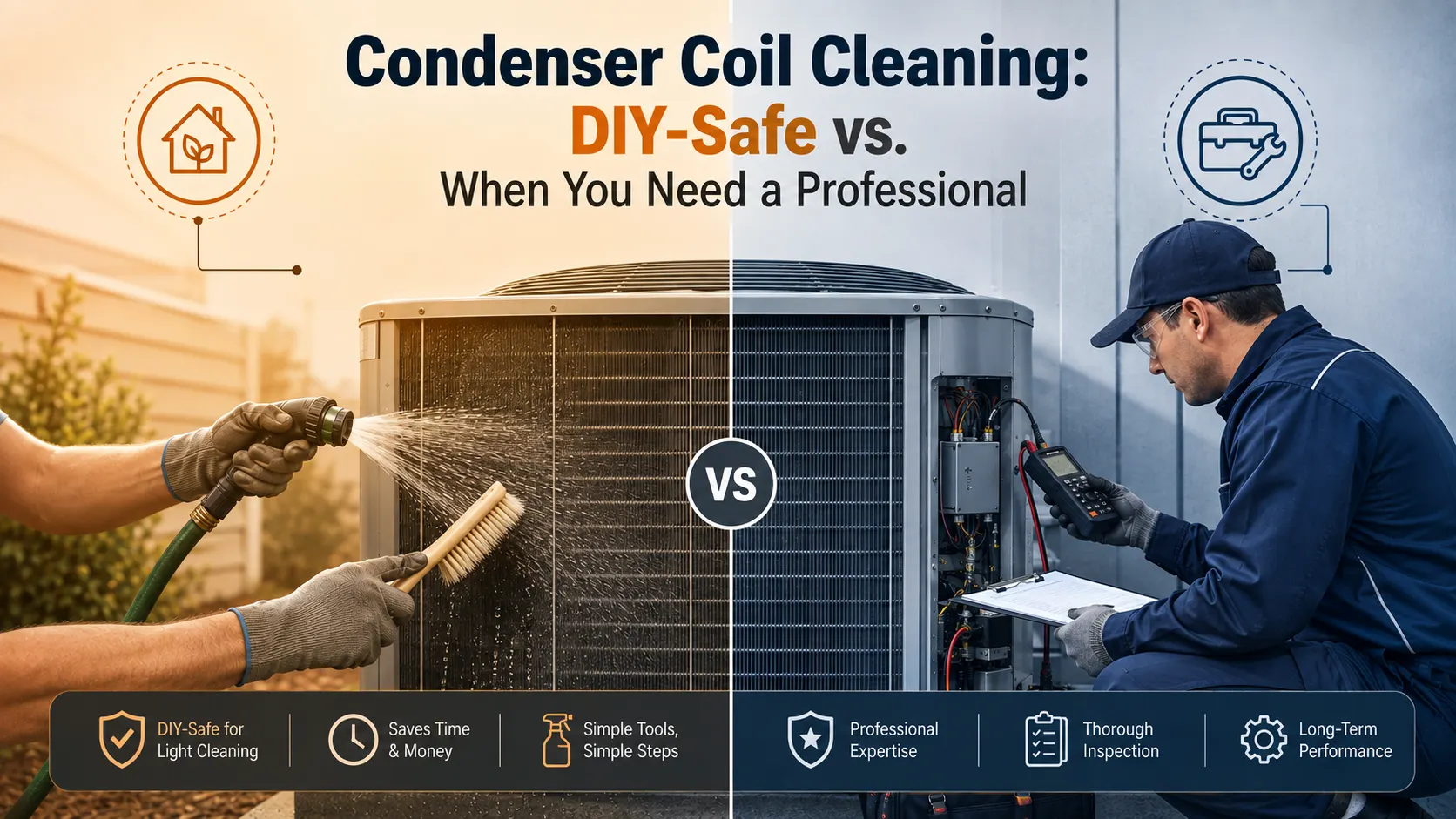
A dirty condenser coil is one of the most common—and most fixable—reasons an HVAC or refrigeration system starts underperforming. However, not every cleaning job is suitable for DIY maintenance.
Knowing what you can safely handle yourself and when professional assistance is necessary can help you avoid equipment damage, unnecessary repair costs, and potential safety risks.
This breakdown explains exactly what is safe to do yourself—and when calling a professional is the smarter choice.
Why Condenser Coil Cleaning Matters More Than You Think
The condenser coil plays a critical role in releasing the heat removed from the air by your cooling system. When the coil becomes covered with dust, pollen, grease, or industrial debris, heat transfer becomes less efficient.
This can force the compressor to work harder to deliver the same cooling output.
Poorly maintained coils can lead to:
- Higher energy consumption and increased operating costs
- Reduced cooling performance
- Greater compressor workload
- Increased system stress
- Premature component wear
- Potential equipment failures
Dirty coils can increase compressor energy consumption by up to 30%, according to a 2023 International Energy Agency report on commercial HVAC efficiency.
For systems operating continuously, this inefficiency can translate into significant ongoing energy expenses.
Your Warranty Could Also Be at Risk
Neglecting Condenser Coil Cleaning may also affect your equipment warranty.
Many manufacturers require documented routine maintenance, and if an equipment failure is linked to poorly maintained or fouled coils, warranty coverage could potentially be denied.
What’s Actually Safe to DIY?
For light and routine maintenance, cleaning a condenser coil yourself can be perfectly reasonable.
However, always prioritize safety and follow the equipment manufacturer’s maintenance instructions.
DIY cleaning is generally suitable for:
- Turning off the power completely
Switch off the system at the breaker or outdoor disconnect before touching the unit. - Removing visible debris
Clear away leaves, grass clippings, twigs, dust, and other loose material from around and on the condenser. - Gentle rinsing
Use a garden hose at low pressure and spray from the inside of the coil outward to push debris away from the coil. - Light surface cleaning
A soft brush or mild detergent-and-water solution can help remove surface dust and light grime.
How Long Does DIY Cleaning Take?
For a straightforward outdoor residential unit, basic Condenser Coil Cleaning generally takes around 30–60 minutes.
The main cost is usually a basic cleaner and your time.
Where DIY Cleaning Crosses the Line
Not every condenser requires the same cleaning approach. Once the job involves specialized tools, chemicals, electrical components, or heavy contamination, professional maintenance becomes the safer option.
Avoid DIY when dealing with:
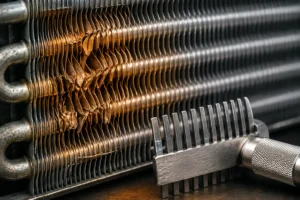
1. Bent or Damaged Fins
Bent fins can restrict airflow and reduce heat transfer.
A specialized fin comb may be required to straighten them correctly. Improper handling can tear or further damage the fins.
2. Chemical or Foaming Coil Cleaners
The wrong cleaning chemical can damage the coil.
Some formulations—particularly acidic cleaners—can contribute to corrosion and refrigerant leaks if they are unsuitable for the coil material.
3. Heavily Soiled or Industrial Coils
Coils used in environments such as:
- Food processing facilities
- Cold storage facilities
- Manufacturing plants
- High-dust production environments
may require commercial-grade enzymatic cleaners and documented cleaning cycles.
Depending on the environment, cleaning may be required monthly or quarterly during peak operating periods.
4. Electrical Components
Anything involving electrical components creates a genuine electric shock hazard.
If you are not completely confident about safely working around the disconnect or electrical enclosure, professional service is the better option.
How Much Does Professional Condenser Coil Cleaning Cost?
Professional condenser coil cleaning for residential-scale systems generally costs around $100–$300 and can take approximately 1–2 hours.
The advantage is that professional service typically goes beyond simply cleaning the coil.
A technician may also inspect:
- Refrigerant levels
- Fan motors
- Electrical components
- Airflow
- General system condition
- Signs of potential equipment problems
This makes professional Condenser Coil Cleaning both a maintenance service and an opportunity to identify developing issues before they become expensive repairs.
Industrial & Commercial Systems Need a Different Standard
For warehouses, cold storage facilities, manufacturing plants, and other commercial or industrial environments, the DIY-versus-professional boundary moves much further toward professional maintenance.
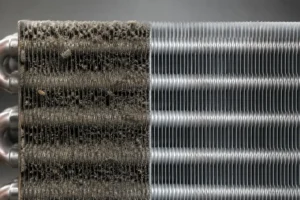
Industrial condenser coils can experience significantly heavier fouling from:
- Production dust
- Organic matter
- Grease
- Industrial debris
- Mineral scale in water-cooled systems
Why does this matter?
For large cooling systems operating continuously, a fouled condenser coil is more than an efficiency problem.
It can contribute to:
- Increased energy consumption
- Reduced cooling capacity
- Greater equipment stress
- Higher maintenance costs
- Operational downtime
In industries such as food processing and cold storage, inadequate maintenance can also create food safety and compliance concerns.
Why Condenser Design Matters for Maintenance
This is where choosing an experienced condenser manufacturer for HVAC applications becomes important.
Good equipment design isn’t only about heat transfer and cooling efficiency. It should also consider maintenance accessibility and long-term serviceability.
Well-engineered condenser units can feature more accessible coil layouts, making routine maintenance:
- Easier
- Safer
- Less labor-intensive
- More consistent
Better engineering can also reduce the need for aggressive cleaning cycles throughout the equipment’s operating life.
How Often Should Condenser Coil Cleaning Be Done?
There is no single cleaning schedule that works for every system.
The ideal frequency depends heavily on the operating environment.
Clean Residential or Commercial Environments
Once or twice a year
Late spring is often a practical time to schedule maintenance before the peak cooling season.
Dusty, High-Pollen, or High-Traffic Environments
Every 3–6 months
Higher exposure to airborne contaminants means the coil can become fouled more quickly.
Heavy Industrial Environments
Monthly or quarterly during high-production periods
Food processing, cold storage, manufacturing, and similar environments may require significantly more frequent maintenance.
What About Coil Lifespan?
With proper maintenance, a condenser coil can potentially last 10–15 years or longer.
However, actual lifespan depends on factors such as:
- Coil material
- Operating environment
- Corrosion exposure
- Maintenance frequency
- Cleaning practices
- Overall equipment quality
Equipment build quality matters—but consistent Condenser Coil Cleaning and maintenance are equally important.
The Simple Rule of Thumb
When deciding whether a condenser coil cleaning job is safe to handle yourself, keep it simple:
DIY may be suitable for:
- Surface dust
- Loose leaves and debris
- Light dirt
- Gentle low-pressure rinsing
Call a professional for:
- Bent or damaged fins
- Heavy contamination
- Chemical cleaning
- Industrial coil fouling
- Electrical component access
- Suspected refrigerant leaks
- Complex equipment
When in doubt, don’t risk the equipment.
A poorly executed cleaning job can cause damaged fins, corrosion, refrigerant leaks, electrical hazards, or warranty complications—turning a simple maintenance task into an expensive repair.
FAQ’s
Can I clean my AC condenser coil myself?
Yes, for light surface dust and loose debris. Turn off the power, remove visible debris, and gently rinse the coil from the inside outward.
For bent fins, chemical cleaning, electrical components, or heavily soiled coils, professional cleaning is safer.
How often should condenser coil cleaning be done?
Typical residential or commercial systems may need cleaning once or twice a year. Dusty environments may require cleaning every 3–6 months, while heavy industrial environments may require monthly or quarterly cleaning.
Does condenser coil cleaning actually save money?
Yes. Dirty coils can increase compressor energy consumption by up to 30%, making regular Condenser Coil Cleaning an important part of controlling energy costs and maintaining system efficiency.
Can DIY cleaning void my warranty?
It can, particularly if improper cleaning damages the coil or the manufacturer requires documented professional maintenance.
Always review the specific equipment warranty and maintenance requirements before using chemical cleaners or performing extensive cleaning.
Why do industrial systems need more frequent condenser coil cleaning?
Industrial systems are exposed to heavier levels of dust, organic debris, production contaminants, grease, and mineral scale.
Regular cleaning helps maintain heat transfer efficiency, reduce equipment stress, and support reliable operation.
Does the condenser manufacturer affect cleaning and maintenance requirements?
Yes. An experienced condenser manufacturer for HVAC systems can design equipment with accessible coil layouts and service-friendly construction.
Better accessibility can make routine maintenance safer, easier, and less labor-intensive throughout the equipment’s operating life.
Final Takeaway
Condenser Coil Cleaning isn’t simply about making a coil look clean—it is about maintaining heat transfer, efficiency, reliability, and equipment life.
For light surface dirt and loose debris, basic DIY maintenance may be sufficient. But when cleaning involves heavy fouling, chemicals, damaged fins, electrical components, or industrial equipment, professional service is the safer and more cost-effective choice.