
Plate Heat Exchanger vs Shell and Tube Heat Exchanger: The Answer May Surprise You
Posted on June 20, 2026
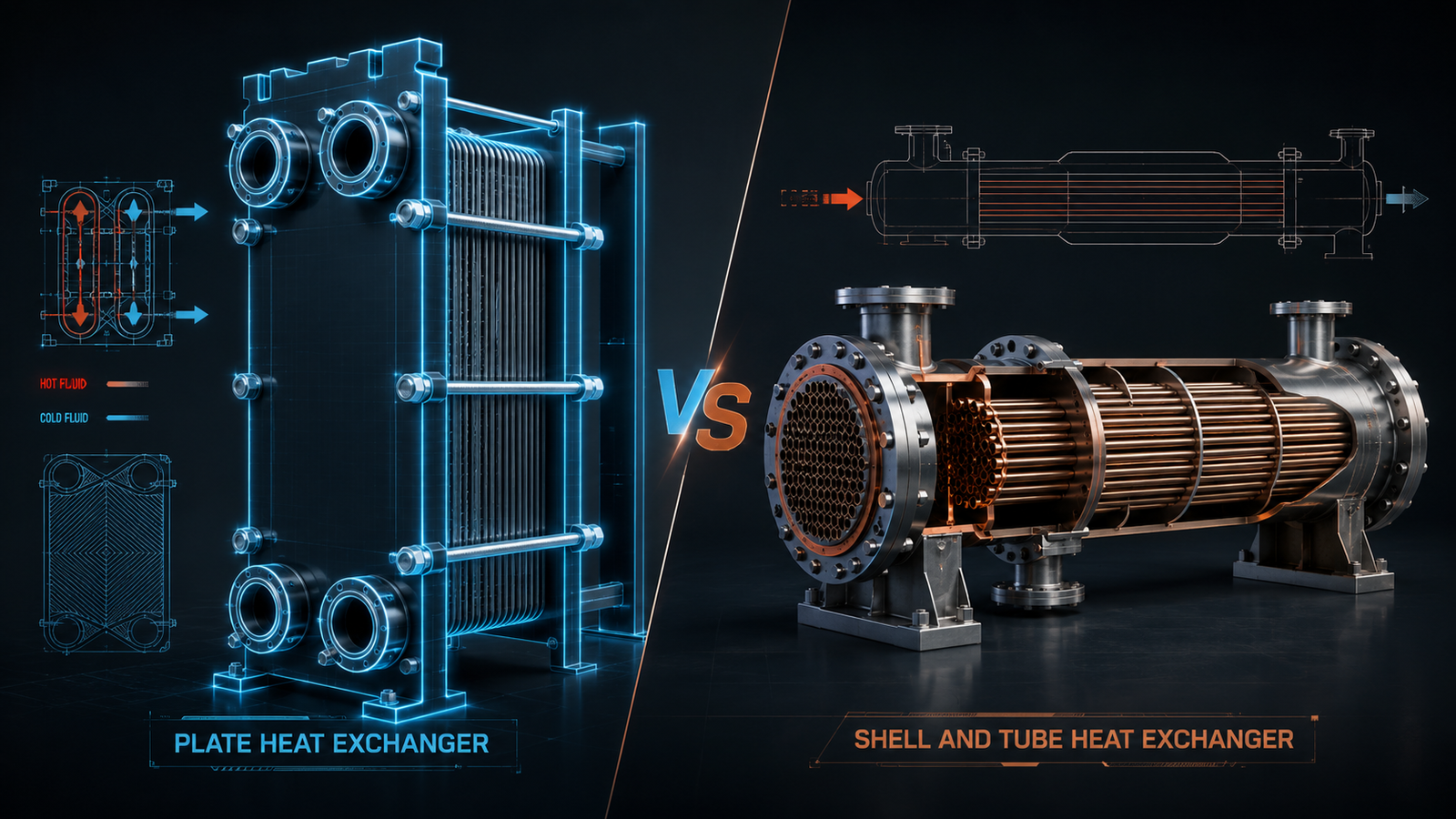
When selecting the right heat exchanger for an industrial application, engineers and plant managers are often faced with a critical decision: should they choose a Plate Heat Exchanger or a Shell and Tube Heat Exchanger?
At first glance, both technologies perform the same function—transferring thermal energy between fluids. However, the way they achieve this, their efficiency levels, maintenance requirements, and operating costs can vary significantly.
As a trusted Heat exchanger manufacturer in India, NBR Cooling Systems frequently helps industries evaluate which technology best suits their operational requirements. While plate heat exchangers have gained popularity due to their compact design and superior efficiency, shell and tube systems continue to dominate demanding industrial environments where durability is critical.
The truth is that there is no universal winner. The ideal heat exchanger depends entirely on the application’s pressure, temperature, fluid characteristics, and long-term performance goals.
Understanding the Basics
What Is a Plate Heat Exchanger?
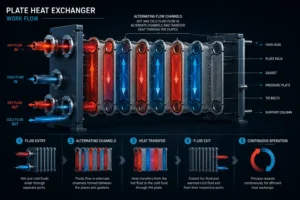
A Plate Heat Exchanger uses a series of corrugated metal plates arranged to create alternating channels for hot and cold fluids. This design maximizes surface area and promotes turbulent flow, allowing the heat exchanger to transfer thermal energy more efficiently.
Common applications include:
- HVAC systems
- Food processing plants
- Pharmaceutical manufacturing
- Dairy processing
- Process cooling systems
- Chemical industries
What Is a Shell and Tube Heat Exchanger?
A Shell and Tube Heat Exchanger consists of a bundle of tubes enclosed inside a cylindrical shell. One fluid flows through the tubes while another flows around them within the shell.
This type of heat exchanger is widely used in:
- Refineries
- Petrochemical plants
- Power generation facilities
- Marine applications
- Heavy industrial processes
- Oil and gas operations
The Efficiency Debate
The primary purpose of any heat exchanger is to transfer heat efficiently while minimizing energy consumption.
Plate heat exchangers excel in this area because their corrugated plates create turbulence even at relatively low flow rates. This increases heat transfer performance and often allows facilities to achieve the same thermal duty using a smaller unit.
Shell and tube systems, however, remain the preferred choice for applications involving extreme temperatures, high pressures, and contaminated process fluids.
At NBR Cooling Systems, both technologies are recommended depending on the operating environment and performance requirements of the customer.
Quick Comparison Table
| Parameter | Plate Heat Exchanger | Shell & Tube Heat Exchanger |
| Heat Transfer Efficiency | Excellent | Good |
| Space Requirement | Compact | Large |
| Energy Efficiency | High | Moderate |
| Maintenance | Easy | Moderate |
| High Pressure Capability | Moderate | Excellent |
| High Temperature Capability | Moderate | Excellent |
| Dirty Fluid Handling | Moderate | Excellent |
| Operating Cost | Lower | Higher |
Why Plate Heat Exchangers Continue to Grow
Modern industries are increasingly prioritizing efficiency, sustainability, and reduced operating costs.
A high-performance heat exchanger can significantly reduce energy consumption while improving overall system performance.
Key benefits include:
- Superior thermal efficiency
- Compact installation footprint
- Lower pumping costs
- Easier maintenance
- Reduced lifecycle expenses
- Faster thermal response
These advantages make plate heat exchangers an excellent choice for facilities looking to maximize efficiency without sacrificing performance.
The Evolution of Modern Heat Exchanger Technology
The thermal management industry continues to evolve with innovations in design and manufacturing.
Recent developments introduced by Micro channel heat exchanger manufacturers in India have helped improve thermal performance while reducing refrigerant charge and overall equipment size. These innovations are particularly valuable in HVAC and refrigeration applications where efficiency is a priority.
Similarly, advancements from leading Plate & Bar manufacturer in India companies have expanded the possibilities for compact and highly efficient thermal systems used across industrial and mobile applications.
These technologies demonstrate how modern engineering is transforming the future of the heat exchanger industry.
Why Shell and Tube Heat Exchangers Still Matter
Despite the growing popularity of plate technology, shell and tube systems continue to serve industries where reliability under extreme conditions is essential.
Their advantages include:
- Exceptional pressure resistance
- High-temperature capability
- Better handling of contaminated fluids
- Long service life
- Proven industrial reliability
For power plants, refineries, and petrochemical facilities, these benefits often outweigh the efficiency gains offered by plate-based systems.
Final Verdict
Choosing the right heat exchanger isn’t about finding a universally superior technology—it’s about selecting the solution that best fits your process requirements.
For HVAC systems, refrigeration plants, food processing facilities, and many industrial cooling applications, plate heat exchangers often provide superior efficiency, lower operating costs, and reduced energy consumption.
However, when dealing with extreme temperatures, high pressures, or challenging process fluids, shell and tube designs remain a dependable solution.
With extensive expertise in thermal management, NBR Cooling Systems helps businesses identify the ideal heat exchanger solution for their applications, ensuring optimal performance, reliability, and long-term value.
FAQ’s
Plate Heat Exchanger, higher flow rate=more heat exchange?
Yes, increasing the flow rate in a Plate Heat Exchanger generally improves heat transfer because it creates more turbulence, which enhances heat exchange between fluids. However, beyond a certain point, higher flow rates can cause excessive pressure drop and increased energy consumption. The optimal flow rate balances maximum heat transfer with efficient system operation.
What are the biggest sources of error when engineers size heat exchangers?
The biggest sources of error in heat exchanger sizing are inaccurate process data, incorrect fluid property assumptions, underestimated fouling factors, and overlooking future operating conditions. Even small mistakes in temperature, flow rate, or pressure calculations can lead to oversized or underperforming equipment. Proper data validation is essential for accurate heat exchanger selection and performance.
Why is my heat exchanger not performing as expected?
A heat exchanger may not perform as expected due to fouling, incorrect flow rates, air pockets, scaling, or operating conditions that differ from the original design. Regular maintenance and proper system monitoring can help identify and resolve these issues before they impact efficiency.
What causes fouling in heat exchangers?
Fouling in heat exchangers is typically caused by scale buildup, dirt, sediment, biological growth, corrosion products, or oil deposits accumulating on heat transfer surfaces. This buildup reduces heat transfer efficiency, increases pressure drop, and can lead to higher operating costs if not addressed regularly.
Which fluid should go through the tubes and which through the shell?
In a shell and tube heat exchanger, high-pressure, corrosive, or fouling fluids are typically placed on the tube side because tubes are easier to inspect and clean. Low-pressure or less demanding fluids are usually directed through the shell side to optimize heat transfer and maintenance efficiency.