
The Science Behind Bus Air Conditioning Systems: How They Deliver Reliable Cooling
Posted on June 18, 2026
Bus Air Conditioning Systems are no longer just a premium feature reserved for luxury coaches. Across India, they have become an essential part of public transportation, employee shuttles, school buses, and long-distance travel fleets. Whether passengers are traveling through the busy streets of Mumbai, the hot highways of Rajasthan, or the humid coastal regions of Tamil Nadu, reliable cooling plays a crucial role in ensuring comfort throughout the journey.
As passenger expectations continue to rise, Bus Air Conditioning Systems have evolved into highly engineered solutions designed to maintain cabin comfort even under extreme operating conditions. Behind every cool and comfortable ride is a combination of advanced components working together to remove heat efficiently and consistently.
Why Reliable Cooling Matters More Than Ever
Modern transportation operators face increasing pressure to provide a comfortable travel experience. High temperatures, crowded passenger cabins, and long operating hours can quickly create uncomfortable conditions if cooling systems fail to perform effectively.
Reliable temperature control helps:
- Improve passenger comfort
- Enhance travel experience
- Reduce driver fatigue
- Support premium transportation services
- Improve customer satisfaction
This is why thermal management technology has become a key focus area for fleet operators and bus manufacturers across India.
Understanding How the Cooling Cycle Works
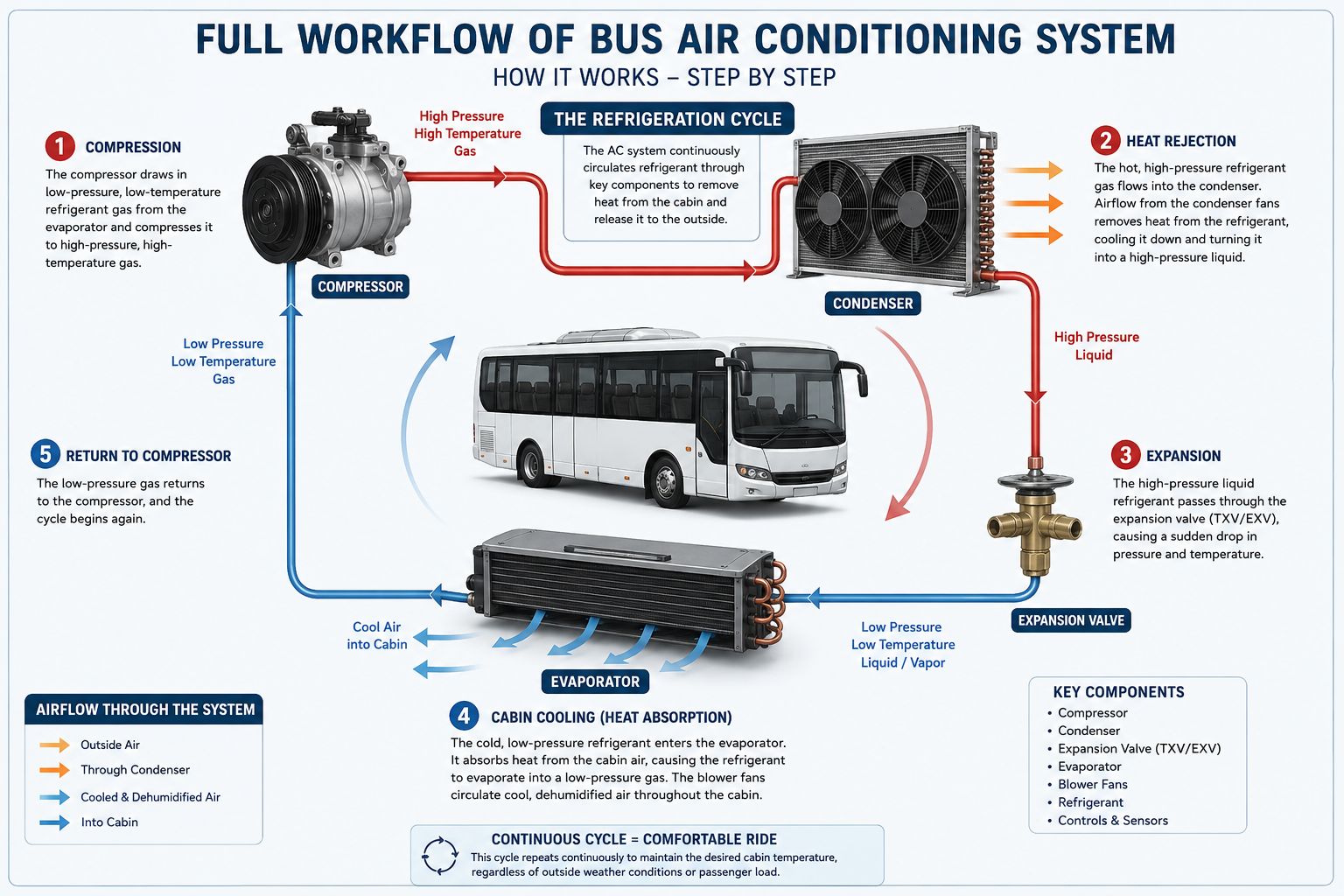
Although the process may seem complex, the science behind bus cooling follows a simple principle: remove heat from inside the vehicle and release it outside.
The system continuously circulates refrigerant through multiple components to achieve this process.
Step 1: Compression
The cycle begins with the compressor, which increases the pressure and temperature of the refrigerant gas.
Step 2: Heat Rejection
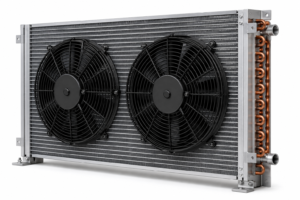
The hot refrigerant then enters the Bus ac condenser, where heat is transferred to the outside environment. As airflow passes through the condenser, the refrigerant cools and changes into a high-pressure liquid.
Step 3: Expansion
The refrigerant passes through an expansion device that reduces both pressure and temperature.
Step 4: Cabin Cooling
The cooled refrigerant enters the evaporator, where it absorbs heat from the passenger compartment. Blowers then distribute cool air evenly throughout the vehicle.
The process repeats continuously to maintain a comfortable cabin temperature regardless of external weather conditions.
Key Components and Their Functions
The efficiency of a cooling system depends on how effectively each component performs its role.
| Component | Primary Function | Impact on Performance |
| Compressor | Compresses refrigerant gas | Initiates the cooling cycle |
| Condenser | Releases heat to the environment | Improves cooling efficiency |
| Expansion Valve | Reduces refrigerant pressure | Enables rapid cooling |
| Evaporator | Absorbs cabin heat | Produces cold air |
| Blower System | Distributes airflow | Maintains passenger comfort |
Understanding these components helps explain why proper maintenance and quality manufacturing are critical for long-term reliability.
Heat Transfer Throughout the Cooling Process
A simplified view of how heat is gradually removed during the cooling cycle:
- Cabin Heat Collection → Highest heat load
- Compression Stage → Heat concentration increases
- Condensing Stage → Heat rejection begins
- Expansion Stage → Temperature drops significantly
- Evaporator Stage → Cooling delivered to passengers
The effectiveness of each stage directly influences overall system performance.
Challenges Faced by Indian Transportation Fleets
Operating conditions in India create unique demands for thermal management systems.
Extreme Summer Temperatures
Many regions regularly experience temperatures above 40°C, increasing cooling requirements significantly.
Dust and Environmental Contaminants
Road dust can accumulate on heat exchanger surfaces and reduce cooling efficiency if maintenance is neglected.
Heavy Passenger Loads
Fully occupied buses generate additional heat, placing extra demand on cooling equipment.
Urban Stop-and-Go Traffic
Limited airflow during traffic congestion can affect heat rejection performance, making component design even more important.
These challenges highlight the importance of investing in durable and efficient cooling technologies.
The Growing Importance of Advanced Condenser Technology
One of the most important developments in modern transportation HVAC systems has been the advancement of lightweight aluminum heat exchangers.
Modern condenser designs provide:
- Faster heat transfer
- Lower refrigerant requirements
- Improved fuel efficiency
- Reduced system weight
- Better resistance to corrosion
For fleet operators, these improvements translate into better performance and lower operating costs over time.
Why Manufacturers Focus on Thermal Efficiency
Today’s transportation industry demands solutions that balance cooling performance, durability, and energy efficiency.
This has encouraged leading companies to invest heavily in research and advanced manufacturing techniques.
As a trusted Bus air conditioning condenser manufacturer India, companies such as NBR Cooling Systems are helping OEMs, bus body builders, and fleet operators improve thermal performance through innovative heat exchanger technologies. Their engineering expertise supports reliable cooling across diverse operating environments, from urban transit buses to long-distance luxury coaches.
How Modern Engineering Improves Passenger Comfort
Recent advancements have enabled cooling systems to become more compact, efficient, and reliable than ever before.
Benefits of modern thermal management solutions include:
- Faster cabin cooling
- Consistent airflow distribution
- Reduced maintenance requirements
- Enhanced operational reliability
- Improved energy efficiency
These improvements help operators maintain service quality while controlling operating expenses.
The Future of Bus Cooling Technology
The transportation sector is moving toward more sustainable and energy-efficient solutions.
Electric buses, stricter efficiency standards, and rising passenger expectations are driving innovation across the HVAC industry. Future systems will focus on smarter controls, improved thermal efficiency, and lighter components that support both performance and sustainability goals.
As technology continues to evolve, cooling systems will play an even larger role in enhancing vehicle efficiency and passenger comfort.
Final Thoughts
Reliable passenger comfort depends on far more than simply producing cold air. Advanced engineering, efficient heat transfer, and durable components all contribute to the performance of modern Bus Air Conditioning Systems.
As transportation fleets continue to modernize across India, manufacturers are increasingly adopting technologies such as the Multi channel condenser to achieve superior heat rejection, improved efficiency, and long-term operational reliability. These innovations are helping shape the next generation of cooling solutions for safer, more comfortable, and more efficient bus travel.
FAQ’s
What causes a bus AC condenser to fail?
A bus AC condenser can fail due to dirt buildup, corrosion, refrigerant leaks, physical damage, or restricted airflow. Poor maintenance and prolonged exposure to harsh operating conditions can reduce heat transfer efficiency and eventually lead to cooling performance issues.
Why is my bus AC cooling while driving but not when stationary?
If a bus AC cools while driving but not when stationary, the most common cause is insufficient airflow across the condenser. This can result from faulty condenser fans, blocked condenser fins, or reduced heat rejection when the vehicle is not moving.
What are the main components of a bus AC system?
The main components of a bus AC system include the compressor, condenser, expansion valve, evaporator, blower, and refrigerant. Together, these components work to remove heat from the cabin and deliver cool, comfortable air to passengers.
How do I know what kind of air conditioning system I need for my bus?
The right bus air conditioning system depends on factors such as passenger capacity, bus size, operating climate, route conditions, and cooling requirements. Consulting an experienced HVAC manufacturer can help determine the most efficient solution for your specific application.
What is the best condenser type for a bus AC system?
Microchannel condensers are widely considered one of the best options for bus AC systems. They offer superior heat transfer, reduced refrigerant usage, lighter weight, and improved cooling efficiency compared to traditional condenser designs.
How is electric bus AC different from conventional bus AC?
Electric bus AC systems are powered by the vehicle’s battery, while conventional bus AC systems typically run through an engine-driven compressor. Electric bus AC units are designed to maximize energy efficiency and minimize battery consumption while maintaining passenger comfort.