
Fin Tube vs Micro Channel Heat Exchangers : Which One Is Right for Your Application?
Posted on June 16, 2026
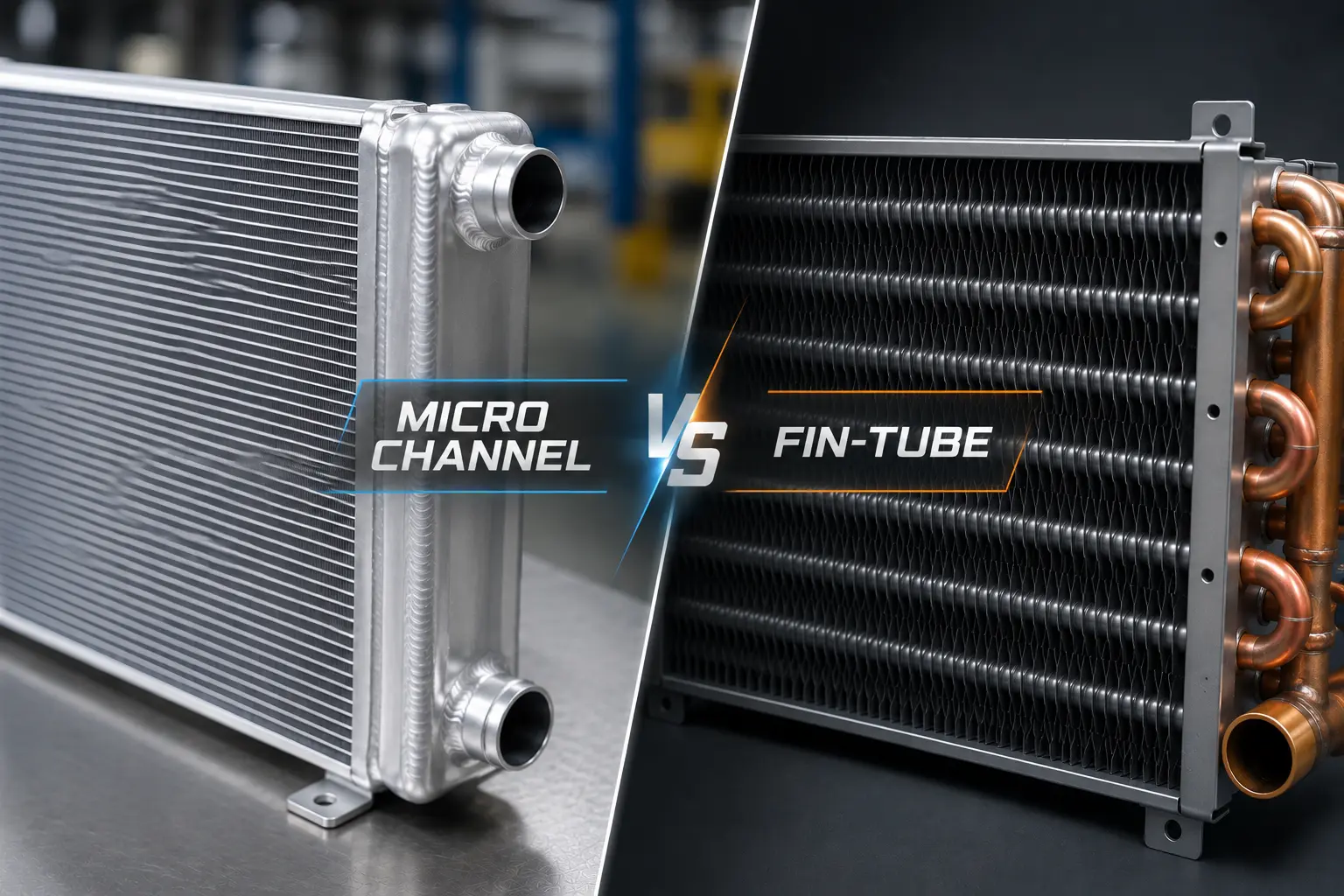
Micro Channel Heat Exchanger technology has emerged as one of the most efficient solutions for modern cooling systems, offering superior heat transfer performance, compact design, and reduced refrigerant requirements. As industries continue to focus on energy efficiency and advanced thermal management, Micro Channel Heat Exchangers are increasingly being compared with traditional fin-tube designs to determine which technology delivers better long-term performance and operational value.
At NBR Cooling Systems, we understand the growing demand for innovative cooling technologies that improve efficiency while reducing operating costs. As an experienced Heat Exchanger Manufacturer in India, NBR Cooling Systems provides advanced thermal management solutions designed to meet the evolving requirements of HVAC, refrigeration, automotive, and industrial applications. Understanding the differences between microchannel and fin-tube heat exchanger technologies can help businesses select the most suitable solution for their specific cooling needs.
What is a Micro Channel Heat Exchanger?
Picture flat aluminum tubes packed with multiple tiny flow channels — that’s the core idea behind microchannel design. By maximizing surface area in a compact footprint, this technology pushes a lot more heat transfer into a much smaller, lighter package.
Why people are switching to it:
- Compact and lightweight build — saves space without losing performance
- Excellent heat transfer efficiency
- Uses significantly less refrigerant
- Strong resistance to corrosion
- Lower energy consumption over time
- Reduced long-term operating costs
It’s no surprise that more Micro Channel Heat Exchanger Manufacturers in India are ramping up production for HVAC, refrigeration, automotive, and industrial cooling applications.
What is a Fin-Tube Heat Exchanger?
Fin-tube heat exchangers have been the industry standard for decades — and for good reason. They use copper or aluminum tubes wrapped in metal fins, increasing surface area for heat exchange.
What makes them stick around:
- Simple, well-understood construction
- Easy and cost-effective to manufacture
- Proven track record across countless applications
- Widely available repair and replacement parts
That said, as cooling demands get tougher and space gets tighter, many industries are asking whether fin-tube technology can still keep up.
Micro Channel vs Fin-Tube: Head-to-Head Comparison
| Factor | Micro Channel | Fin-Tube |
| Heat transfer efficiency | Higher | Good, needs more surface area |
| Size & weight | Compact, lightweight | Bulkier |
| Refrigerant usage | Lower | Higher |
| Maintenance | Less frequent | Easier to repair |
| Upfront cost | Higher | Lower |
| Corrosion resistance | Excellent | Moderate |
Where Are Micro Channel Heat Exchangers Used?
This technology has found its way into a wide range of industries:
- HVAC systems
- Air conditioning units
- Refrigeration equipment
- Automotive cooling systems
- Industrial process cooling
- Data center cooling
- Power generation equipment
Leading Micro Channel Heat Exchanger Manufacturers in India are now building customized units tailored to each of these use cases — because one-size-fits-all rarely works in industrial cooling.
Don’t Forget Plate & Bar Heat Exchangers
While microchannel and fin-tube get most of the attention, Plate & Bar Heat Exchangers deserve a mention too — especially for heavy-duty environments. A reliable Plate & Bar Manufacturer in India builds these for applications where durability and pressure resistance matter most.
Typical applications:
- Defense equipment
- Construction machinery
- Mining equipment
- Compressors
- Hydraulic systems
- Power generation
Each of these three technologies — microchannel, fin-tube, and plate & bar — has its own sweet spot. None of them is universally “better”; it’s about matching the tech to the job.
How to Choose the Right One
Go with Micro Channel if:
- Space is tight and you need a compact footprint
- Energy efficiency is a top priority
- You want to cut down on refrigerant usage
- Lightweight construction matters (e.g., transport or mobile units)
Go with Fin-Tube if:
- You need easy, low-cost repairs
- Budget constraints are a major factor
- You’re upgrading an existing traditional HVAC system
Go with Plate & Bar if:
- You’re dealing with heavy-duty, high-pressure industrial environments
- Durability under extreme conditions is non-negotiable
A good Heat Exchanger Manufacturer in India will walk you through these trade-offs based on your actual operating conditions — not just sell you whatever’s in stock.
Final Thoughts
There’s no single “best” heat exchanger — only the best one for your application. If you’re optimizing for space, energy savings, and reduced refrigerant use, microchannel technology is hard to beat. If reliability, repairability, and lower upfront costs are your priority, fin-tube still holds its ground. And for heavy industrial environments, plate & bar designs bring durability that the other two simply aren’t built for.
Talk to an experienced Heat Exchanger Manufacturer in India — whether that’s a Micro Channel Heat Exchanger Manufacturer or a Plate & Bar Manufacturer — to get a solution engineered around your actual cooling load, environment, and budget rather than a generic off-the-shelf option.
FAQ’s
Is a microchannel heat exchanger always better than fin-tube?
Not always. Microchannel offers better efficiency and a smaller footprint, but fin-tube remains a solid, budget-friendly choice — especially for repairs and simpler systems.
Why do microchannel heat exchangers use less refrigerant?
Their compact, multi-channel design requires a smaller internal volume to achieve the same (or better) heat transfer, which directly reduces the refrigerant charge needed.
Are microchannel heat exchangers more expensive to repair?
They generally need less maintenance overall, but when repairs are needed, fin-tube systems tend to be simpler and cheaper to fix due to their traditional construction.
Can microchannel heat exchangers be used in industrial settings, not just HVAC?
Yes — they’re increasingly used in industrial process cooling, data centers, and power generation equipment where space and energy efficiency are priorities.
Are Micro Channel Heat Exchangers Difficult to Repair?
Yes, Micro Channel Heat Exchangers can be more challenging to repair than traditional fin-tube heat exchangers because of their compact aluminum construction and intricate channel design. Specialized tools and expertise are often required to address leaks or damage. However, with proper maintenance and regular cleaning, they provide excellent durability, reliable performance, and a long operational lifespan.